The American Dream, the 1937 Billboard, and the Weight of Student Debt
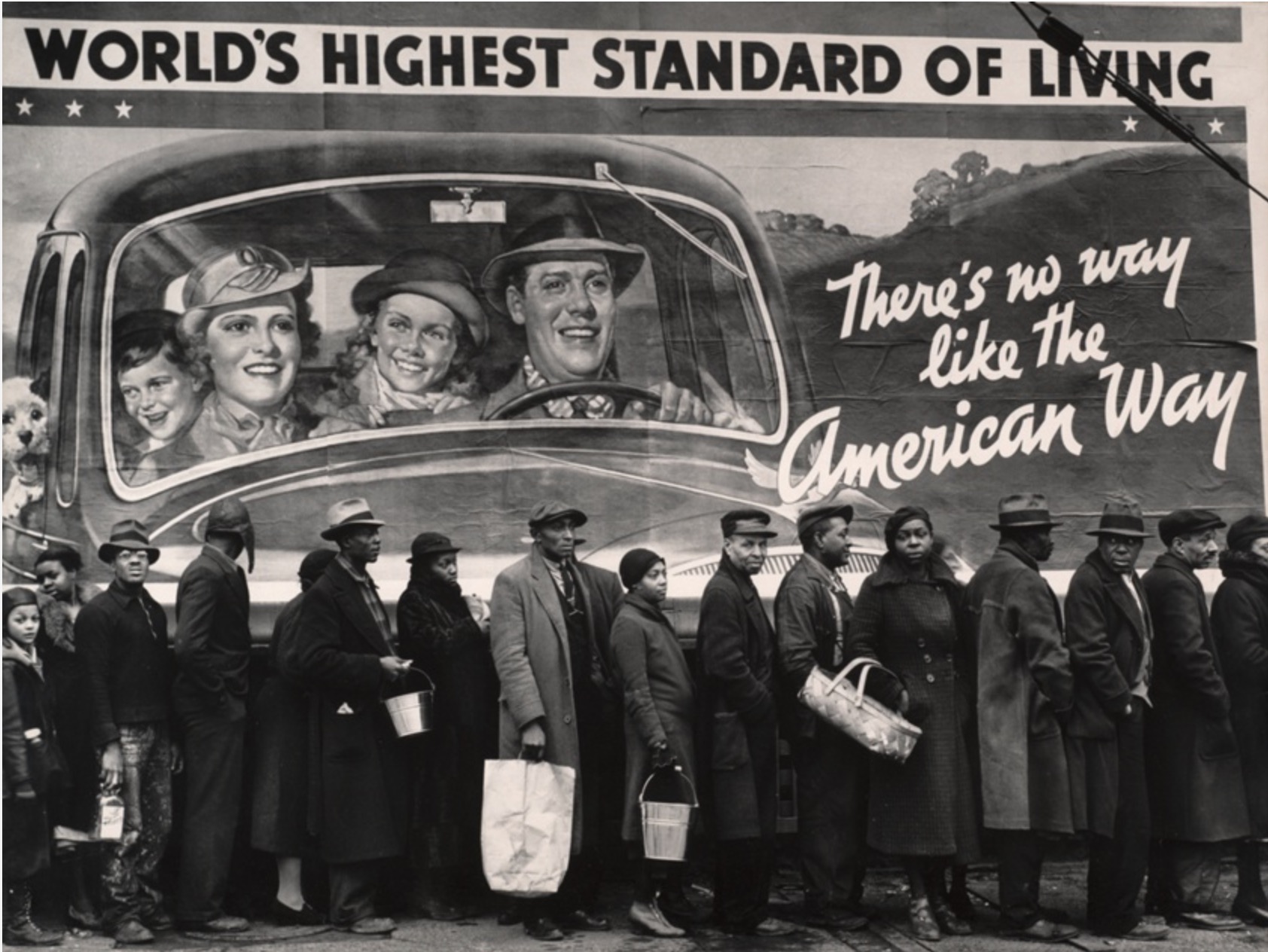
In 1937, during the Great Depression, photographer Margaret Bourke-White captured one of America’s starkest contradictions. A line of African American families, displaced by the Ohio River flood, waited in the cold for food aid. Above them loomed a billboard showing a smiling white family in a shiny car, with the slogan
“World’s Highest Standard of Living — There’s no way like the American Way.”
The image became an enduring symbol of the gap between the promise of the American Dream and the reality faced by millions. Nearly 90 years later, that gap has reappeared in education. For Decades, students were told: Go to college, get a degree, and success will follow. But today, the reality often looks more like a breadline than a billboard. However, opportunities exist.
Crisis
- $1.8 Trillion in U.S. student debt
- $117 Billion already in default
- 42+ Million Americans carrying that debt. (As of June 2025)
- No balance in funding education. Elite Schools use billion-dollar endowments to fund aid.
Opportunity
- Trade careers in high demand
- Wages often match or exceed bachelor’s degree
- Immediate openings in renewable energy, advanced manufacturing, health care, tech.
- Hands-on roles are resistant to automation and AI displacement
These aren’t faceless numbers — they represent graduates burdened with loans larger than mortgages, entering job markets that cannot always deliver the careers they were promised. Jobs are the lifeblood of the American Dream. Jobs present opportunities. Without them, even the most expensive degree is only a piece of paper. But the Dream has always meant more than a paycheck — it is also about dignity in work, respect in community, and the chance to build a stable life for one’s family. Yet, just as in 1937, the picture is not only bleak. A different path exists — one that is often overlooked. Across America, industries
such as advanced manufacturing, renewable energy, healthcare technology, welding, and electrical systems face critical worker shortages. These careers offer wages that often match or exceed those of bachelor’s degree holders — and they offer something rare: stability and respect.
However, today, according to a August 30, 2025, a Wall Street Journal/NORC poll quietly revealed only 31% of respondents said they believe the American Dream still holds true. Nearly 70% said it either used to be true or never was.The sentiment behind the numbers is even more telling. For decades, the American Dream promised that hard work would lead to upward mobility, homeownership, and a better life for the next generation. But today, that promise feels increasingly out of reach if not impossible. Rising costs, stagnant wages, and a housing market that seems designed to exclude have reshaped the landscape. Even among high earners, the dream feels elusive. One respondent earning $350,000 a year confessed he couldn’t afford to grow his family due to housing constraints. The poll found that only a quarter of respondents believe they have a good chance of improving their standard of living. Confidence in the future is waning, and with it, the old narrative of prosperity through perseverance. Yet in the midst of this disillusionment, a quiet shift is underway. People are turning toward purpose-driven lives, seeking meaning in community, craftsmanship, and character. Trade education, apprenticeships, debt-free pathways, and local entrepreneurship are gaining traction as alternatives.
This is where a new vision of the American Dream begins — It’s a dream that values contribution over consumption, and resilience over status. And it’s being built not by institutions, but by individuals and communities who refuse to let the promise fade. The American Dream isn’t dead, it’s evolving. When we present only one version of the American Dream, we risk leaving millions behind.
Rice University: A Legacy of Access and Excellence
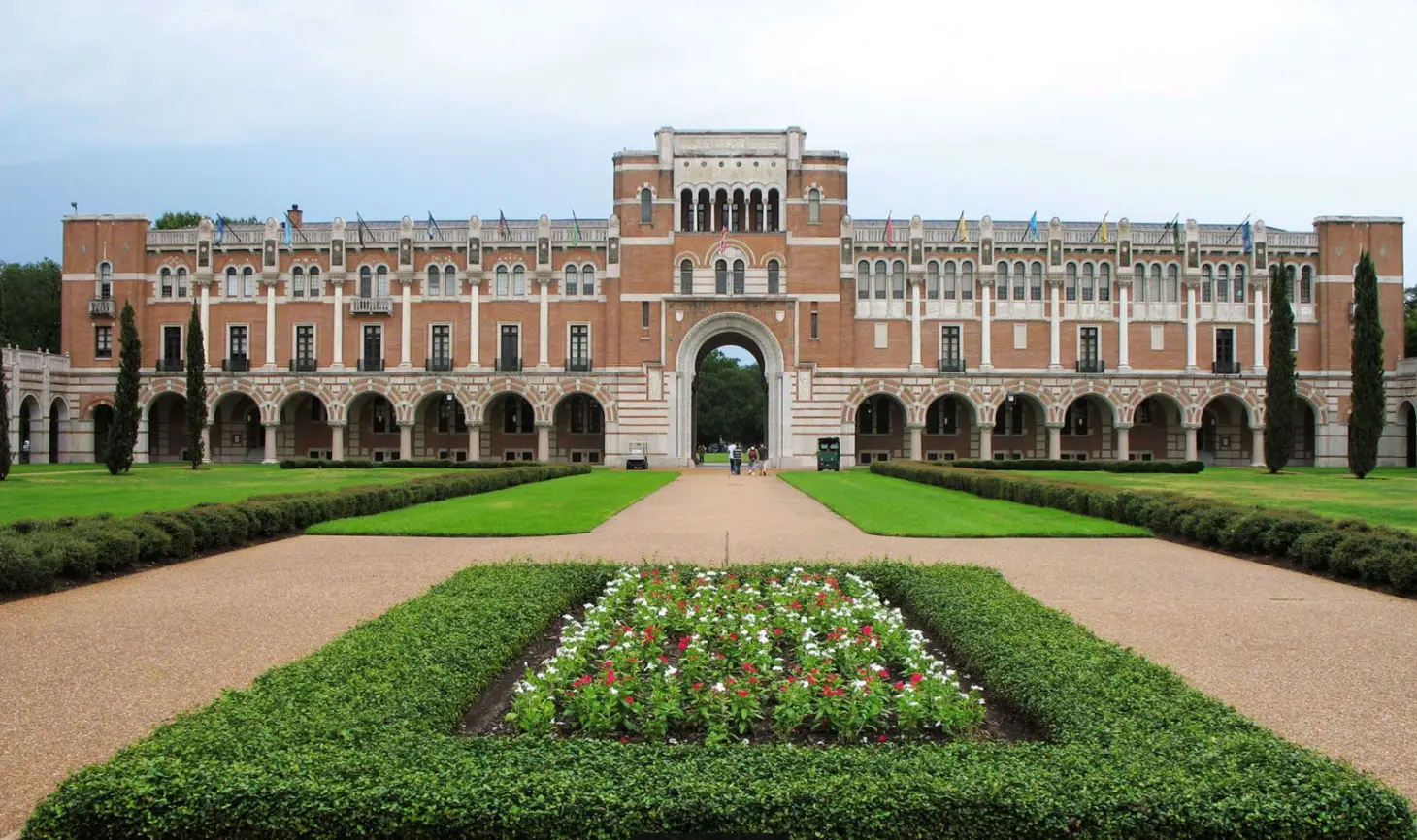
Founded in Houston in 1891 through the vision of William Marsh Rice, the university received a founding endowment of 4.6 million in 1904, from the estate of William Marsh Rice. Rice opened its doors in 1912 with a revolutionary idea: tuition-free education for all students. This was made possible by Rice’s original endowment which by 1912 had grown to roughly $9 million — an extraordinary sum for its time, equivalent to about $300 million today. For more than five decades, Rice carried out this mandate, ensuring access to world-class learning regardless of financial means.
Although tuition was introduced in 1965, Rice preserved its founding spirit through generous scholarships and, more recently, through The Rice Investment — a bold aid program launched in 2019 that provides full tuition to middle- and lower-income students. This return to Rice’s original vision has placed the university among the nation’s most generous providers of financial aid.
Today, Rice combines academic excellence with accessibility — just as William Marsh Rice intended. With a $7.5 billion endowment covering nearly 40% of its operating budget, the university continues to balance elite achievement with affordability. Forbes ranks Rice #12 on its list of America’s Top Colleges, and Niche places it #10 Best College in America. The numbers reflect this dual mission: students receive an average grant of $53,000, graduate with average debt just above $10,000, and achieve a median 20-year salary above $150,000.
For over a century, Rice has remained faithful to its founding mission: to pair opportunity with excellence, ensuring that financial barriers never stand in the way of talent.
Rice Snapshot
- Founded – 1891 (opened in 1912 as tuition-free by charter)
- Original Endowment – 6 M in 1904 – $9M in 1912 when it opened (~$300M today, inflation-adjusted)
- Current Endowment – $8.1B (as of 2025)
- Historic Model – Tuition-free for over 50 years (1912–1965)
- Modern Aid – The Rice Investment (full tuition for families under income thresholds)
- Recognition – Forbes #12, Niche #10 (2026 lists)
- Student Aid – grant > $53K; avg. debt ~$10K
- Student Outcomes – Median 20-year graduate salary > $150K
- Core Mission – Combining academic excellence with accessibility since 1912
From its 1912 opening with a revolutionary $9 million endowment to its current $7.5 billion foundation, Rice University has remained faithful to its original mission: combining academic excellence with accessibility. Its long tuition-free history, innovative aid programs, and national recognition underscore a legacy of foresight and generosity that continues to shape generations of students. Inflation adjusted, the 1912 endowment of $9 million would be approximately $300 M.
Ivy League Schools: Excellence, leadership, intellectual growth, and social Responsibility
Like Rice, the Ivy League schools emphasize access as part of their mission — but their ability to provide extraordinary financial aid rests on vast endowments. Harvard, Princeton, and Yale alone manage more than $125 billion combined, allowing them to eliminate tuition entirely for many students.
- Harvard University ($50B endowment): Beginning in 2025–26, families with incomes ≤ $100,000 will have all billed expenses covered — tuition, room & board, health insurance, travel — plus a $2,000 startup grant for freshmen and a $2,000 launch grant for juniors.
- Princeton University ($34B): Covers all costs for families earning ≤ $100,000, meeting full need with grants and no loans.
- Yale University ($41B): No strict cutoff — families earning under $75,000 pay nothing, and almost all families under $100,000 pay very little.
- Columbia University ($13B): Families earning ≤ $150,000 are eligible for tuition-free attendance, plus a $2,000 startup grant.
- Brown, Dartmouth, Cornell ($6–10B each): Free tuition or zero family contribution for families typically under $125,000, with full need met by grants.
Their historic women’s counterparts — the Seven Sisters (Vassar, Wellesley, Smith, Mount Holyoke, Bryn Mawr, Barnard, Radcliffe) — also maintain strong aid commitments, with endowments typically between $1B–3B and enrollments of 1,500–3,000 students. Most meet 100% of demonstrated need, ensuring affordability for middle-income families.
What ties these schools together is not only their prestige and rankings, but also their financial capacity. With billions in endowment wealth, they can afford to be generous.
Ivy & Seven Sisters Snapshot
- Harvard – $50B endowment; free for families ≤ $100K + startup/launch grants
- Princeton – $34B; all costs covered ≤ $100K, no loans
- Yale – $41B; most families ≤ $100K pay little or nothing
- Columbia – $13B; tuition-free ≤ $150K + startup grant
- Brown / Dartmouth / Cornell – $6–10B; free tuition or zero family contribution ≤ $125K
- Seven Sisters – $1–3B endowments; 100% of need met; enrollments 1,500–3,000
Williamson College the Trades
Building Craftsmen, Instilling Character
https://williamson.edu/
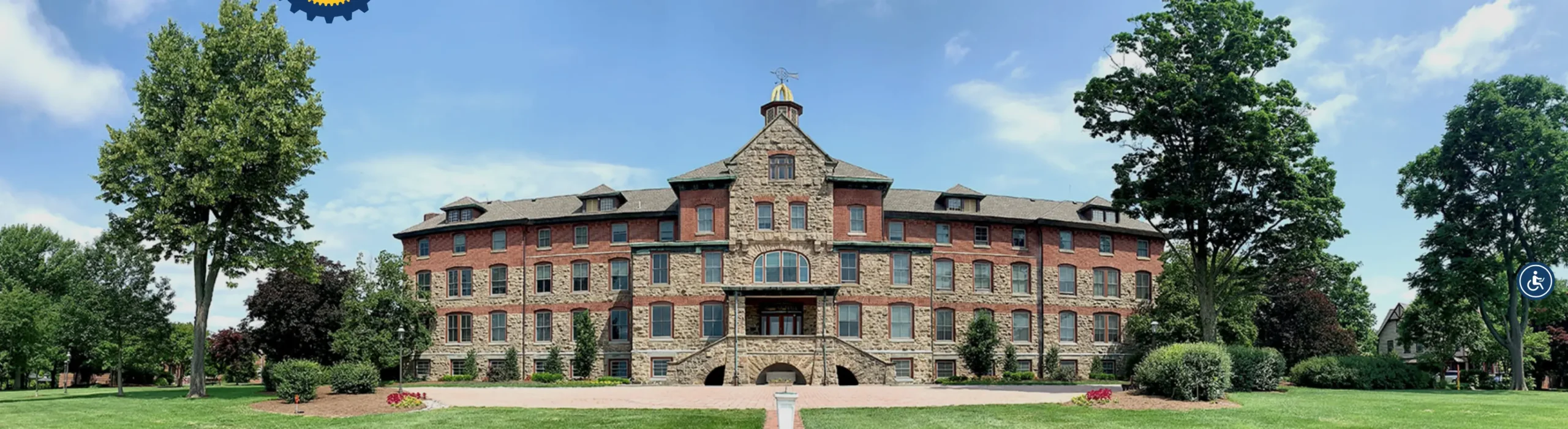
Williamson College of the Trades stands as one of America’s most distinctive educational institutions, founded on December 1, 1888, by Philadelphia merchant and philanthropist Isaiah Williamson. Originally established as the Williamson Free School of Mechanical Trades, the college was created with a revolutionary mission: to provide impoverished young men with comprehensive tuition -free trade education for all students. This vision of accessibility through skilled trades education has remained unchanged for over 136 years, making Williamson a beacon of opportunity for working-class families across the nation.
The college officially opened its doors in 1891 with a three-year, all single male, age 18 – 21 program that combined rigorous academic coursework with hands-on mechanical training. From its inception, Williamson recognized that successful craftsmen needed both theoretical knowledge and practical skills, establishing a curriculum that included mathematics, science, English, and history alongside trade-specific instruction. This holistic approach to vocational education was groundbreaking for its time and continues to define the Williamson experience today.
Six Specialized Trade Programs .
At the heart of Williamson’s educational mission are six specialized trade programs: Carpentry, where students master construction techniques from blueprint to scaffolding; Electrical, focused on wiring, motor controls, and code compliance; Landscape Construction, combining horticulture with design; Machine Tool Technology, emphasizing precision machining and CNC skills; Masonry, covering brick, stone, and concrete craftsmanship; and Power Plant Technology, preparing technicians for energy generation systems. Together, these programs ensure graduates are job-ready in industries vital to America’s infrastructure.”Carpentry, where students master construction techniques from blueprint to scaffolding; Electrical, focused on wiring, motor controls, and code compliance; Landscape Construction, combining horticulture with design; Machine Tool Technology, emphasizing precision machining and CNC skills; Masonry, covering brick, stone, and concrete craftsmanship; and Power Plant Technology, preparing technicians for energy generation systems. Together, these programs ensure graduates are job-ready in industries vital to America’s infrastructure.”
Beyond trade training, Williamson builds a strong academic foundation. Business and mathematics courses develop entrepreneurial skills, financial literacy, and applied problem-solving for construction and manufacturing. Physical sciences provide the theory behind everyday practices — from electrical circuits to concrete chemistry. Students also study construction management, blueprint reading, safety, computer applications, and emerging technologies.
Together, these courses ensure graduates are not only skilled craftsmen but also capable leaders and entrepreneurs, ready to thrive in a changing economy.
Curriculum Snapshot
- Business – Entrepreneurship, financial literacy, contracting basics
- Mathematics – Geometry, trigonometry, statistics for quality control
- Physical Sciences – Physics, chemistry, materials science applied to trades
- Construction Management – Project planning, cost estimation, scheduling, supervision
- Technical Courses – Blueprint reading, safety regulations, computer applications, emerging technologies
Character Development and Community Life
At Williamson, education goes beyond academics and trade skills. Character development is woven into daily life, ensuring graduates leave not only as skilled craftsmen but as responsible, values-driven men. The college’s chaplaincy provides spiritual guidance and opportunities for service, reinforcing integrity, responsibility, and a commitment to community. Athletics, particularly football, instill teamwork, discipline, and school pride — the same qualities that translate directly into success on the job site and in life.
This integration of faith, service, and personal discipline remains central to Williamson’s mission. It ensures that students graduate not just with a trade, but with a sense of purpose, respect for others, and the resilience to meet challenges with integrity.
Character Snapshot
- Chaplaincy & Service – Spiritual guidance, moral instruction, community service opportunities
- Core Values – Integrity, responsibility, diligence, respect, service
- Athletics & Teamwork – Football and intramural promote discipline, perseverance, and cooperation
- Campus Life – Traditions, mentoring, and small community foster accountability and pride
A Living Legacy of Access and Excellence
Since its transition to a post-secondary institution in 1961, Williamson has awarded associate degrees in specialized technology while never abandoning its founding mission of tuition-free trade education for all students. Every student receives tuition, room, and board at no cost — one of the longest-running models of educational philanthropy in the United States.
Every Williamson student receives a full scholarship—covering tuition, housing, and meals—for a three-year associate degree. This makes higher education and skilled trades training possible without debt. Most students also qualify for federal Pell Grants, reflecting the College’s focus on those with the greatest need. You can lean more at https://williamson.edu/admissions/financial-aid/cost-of-attendance/ .
With about 320 students, Williamson offers small classes and close mentorship. Each day is divided between academics and shop training in areas such the one’s below and accompanied by a YouTube video:
- Machine Tool Technology – https://www.youtube.com/watch?v=Vy4Kvlciug0
- Power Plant Technology – https://www.youtube.com/watch?v=YeYGGtJdFys
- Carpentry, Electrical, Masonry – https://www.youtube.com/watch?v=Mx8C45fT_L0 & https://www.youtube.com/watch?v=aibkZstTncM & https://www.youtube.com/watch?v=QhlKmBREyJk
- Landscape Construction & Management – https://www.google.com/search?client=safari&rls=en&q=Williamson+College+of+the+trades+Landscape+Construction+and+Management&ie=UTF-8&oe=UTF-8#fpstate=ive&vld=cid:39b10375,vid:CIK7rehCxS0,st:0
Advisory boards from industry keep the programs current, and graduation rates far exceed national averages.
Life on Williamson’s 220-acre campus is structured and values-based. Students start each day with flag-raising and chapel, then commit to a full schedule of classes and shop training. Dress codes, community work, athletics, and student leadership reinforce responsibility and self-discipline. Core values—Faith, Integrity, Diligence, Excellence, and Service—shape everything at Williamson. To learn more about why Williamson matters, see https://www.youtube.com/watch?v=1IRQPWKt4ks .
Students regularly serve the community through hands-on building and repair projects. The annual Community Service Week brings students, alumni, faculty, and trustees together to give back—reinforcing the idea of gratitude and responsibility for the opportunity they’ve received. The Williamson model of 100% scholarship transforms many student lives. The story of how the direction of many individual students lives have been changed can be viewed at https://williamson.edu/giving/the-impact-of-giving/ .
Williamson graduates achieve outstanding results, breaking the cycle of poverty. The achievements include, 98% job placement rate (five-year average), a 71% on-time graduation rate, seniors often receive multiple offers before graduation, paid internships give underclassmen early career exposure. An annual Career Fair, draws attendance for 230* potential employers to recruit on campus as shown in the following: https://www.youtube.com/watch?v=hdfe3-nEZ_w&t=53s
Williamson received national recognition from Kevin O’Connor, host of This Old House in the video https://www.youtube.com/watch?v=9tHw9s2XozQ .
The impact is clear. Williamson graduates enter the workforce ready to contribute, lead and build lives of purpose and stability.
The impact is clear. Williamson maintains a 98% job placement rate, with most seniors receiving multiple offers for full-time employment and underclassmen securing competitive summer internships. In a time of national labor shortages, Williamson graduates enter the workforce ready to lead, contribute, and build lives of purpose and stability.
Additional Williamson College of the Trades – YouTube Videos
- 1.Williamson College of the Trades (video created 2023) https://www.youtube.com/watch?v=jkrUJhDAtMc
- 2. Williamson Documentary – https://www.youtube.com/watch?v=BFg5rlVYPPI
- 3. Williamson Free School: A Typical Day – https://www.youtube.com/watch?v=LqvYQGQ7ofE
- 4. Williamson’s Chaplaincy Programs – https://www.youtube.com/watch?v=kHq4E9hpM70
The American Dream: A Spectrum of Traditions and Values
The American Dream has always been an evolving vision: the belief that through hard work, character, and opportunity, each generation can build a better life than the one before. What is striking is how Williamson, Rice, and the Ivy League each reflect a different facet of that dream.
At Williamson, the values of faith, integrity, diligence, respect, and service speak directly to the American Dream’s traditional roots. They echo a time when the Dream meant steady work, moral responsibility, and building a stable life for one’s family and community. Williamson’s graduates embody the part of the Dream that prizes self-reliance, craftsmanship, and the dignity of labor-earning success through persistence and serving other along the way. This is the “classic” American Dream: honest work, lived values, and giving back.
Rice University captures the Dream as a balance between opportunity and excellence. Its financial aid policies and Honor Code reflect the conviction that education should be accessible, trustworthy, and collaborative. By anchoring itself in Houston’s diverse community, Rice mirrors the modern Dream: that talent, regardless of background, should find a place to flourish. Its values connect to the Dream of upward mobility through fairness, inclusion, and shared achievement-where success is measured not only in personal gain but also in contributions to the community.
The Ivy League, in turn, represents the aspirational side of the American Dream—the idea of rising to the top and shaping the world. Its emphasis on excellence, leadership, and global impact mirrors the Dream of influence and achievement on a grand scale. For many families, sending a child to an Ivy League school is still the ultimate symbol of “making it.” Yet, this version of the Dream can feel more exclusive, tied to prestige and networks of power. It reflects the aspirational ladder-climbing part of the Dream, where opportunity is leveraged to transform not just one’s own life but entire institutions and nations.
Together, these three traditions remind us that the American Dream is not one thing but many. Williamson reflects its moral and work-based foundation, Rice embodies its promise of fairness and opportunity, and the Ivy League projects its ambition for leadership and influence. Most Americans carry pieces of all three: the desire for dignity in work, the hope for equal opportunity, and the aspiration for success that changes the world.
Expanding the Dream: A New Chapter in Trade Education
Williamson’s model is one of 137 years of success. If Williamson represents the moral and work-based foundation of the American Dream, then the next logical step is to scale that foundation-making it accessible to more students, in more places, with the same integrity and impact. The American Dream cannot remain balanced if only one pathway is fully funded. Today, four-year colleges receive the lion’s share of scholarship dollars and philanthropic attention, while trade schools-despite their critical role in powering the economy-remain underfunded and under-built.
To restore balance, we must invest in a new generation of residential trade colleges. These institutions would offer full three year scholarships, rigorous training, and character-based education to students pursuing careers in the skilled trades. For each campus, the location, enrollment size, building program, and specific programs offered will be determined by the needs of the business community taking into account a complete analysis of current offerings of existing public schools, charter schools, for profit schools, apprenticeships and job training programs. But to do so, they require serious capital—not just to launch, but to endure.
As and example, to maintain a first class, 300 student, residential, 100% scholarships model, it currently cost ~$100,000 per student for the full three years which implies an endowment of $300M ($100,000/ student x 300 students = $300,000,000). This is the same as the inflation adjusted equivalent of Rice’s endowment in 1912 when they opened.
As an example, a school with expected total enrollment of 300 students may have a phased enrollment strategy: 100 students in Year 1, 200 in Year 2, and 300 by Year 3, with that population level maintained. This approach reduces upfront cost, builds donor confidence, and allows for operational excellence from day one.
At full scale, the college would require an annual operating budget of $13.5 million, supported by a $300 million endowment. Campus construction-dorms, shops, dining, and infrastructure-can be built in stages, with an initial capital need of $100-150 million. Altogether, the total philanthropic requirement falls between $400-500 million-far more attainable than the billion-dollar endowments of elite universities, yet transformative in its impact.
This is not just a financial model. It’s a moral one. A 300-student trade college, fully funded and mission-driven, would embody the American Dream in its most grounded form: dignity in work, opportunity without debt, and service to community. It would complement the traditions of Williamson, Rice, and the Ivy League-not compete with them—by offering a fourth pillar of the Dream: one built with hands, guided by values, and sustained by vision.
What Comes Next?
In the coming weeks, a formal proposal to launch a new residential trade college-modeled on Williamson, rooted in character, and built to last. This vision is more than a blueprint; it’s a call to restore balance, dignity, and opportunity to the American Dream. We invite you to follow along, ask questions, and imagine what’s possible when education serves not just the mind, but the whole person.