Meet “The Family You Never Knew”
How large is your family?
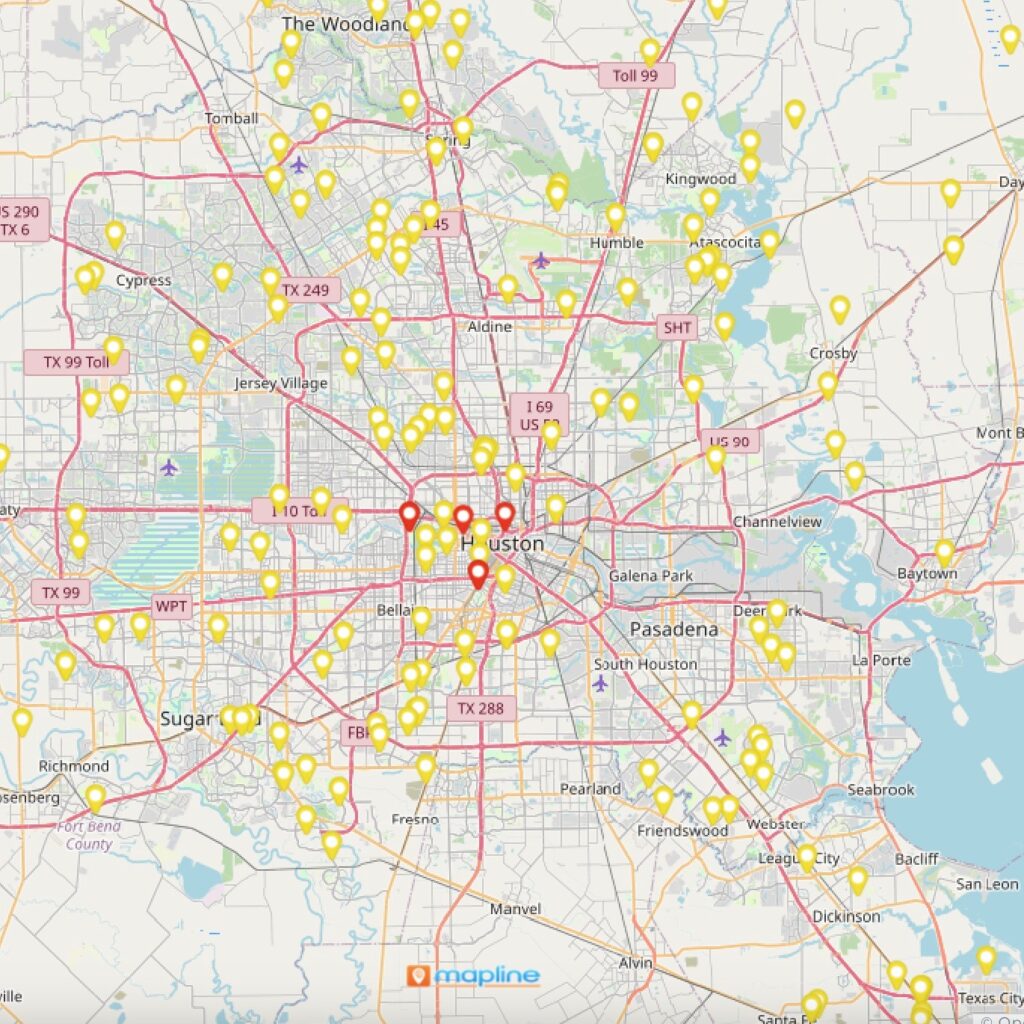
The “Cleveland” name is widely spread throughout the United States. There are cities, schools, streets, parks and businesses named Cleveland, not to mention a U.S. President. I live in Houston, Texas (shown above) which has an estimated Metropolitan area population of 7 Million. In 60+ years,I have never met another “Cleveland” who is not in my immediate family. I suspect my experience with meeting other Cleveland’s is similar to your experience.
I believe genealogy is not just knowing a small amount about a long list of dead people (some may refer to this as “Walking thru the Grave Yard” ) or the 34,277 matches on ancestry.com of which only 5 of these matches are named “Cleveland”. Learning about a common past ancestor may be interesting, however, I believe, having the opportunity to meet the person in real life, is better. Others may say, “Obviously he has never met my relatives.”
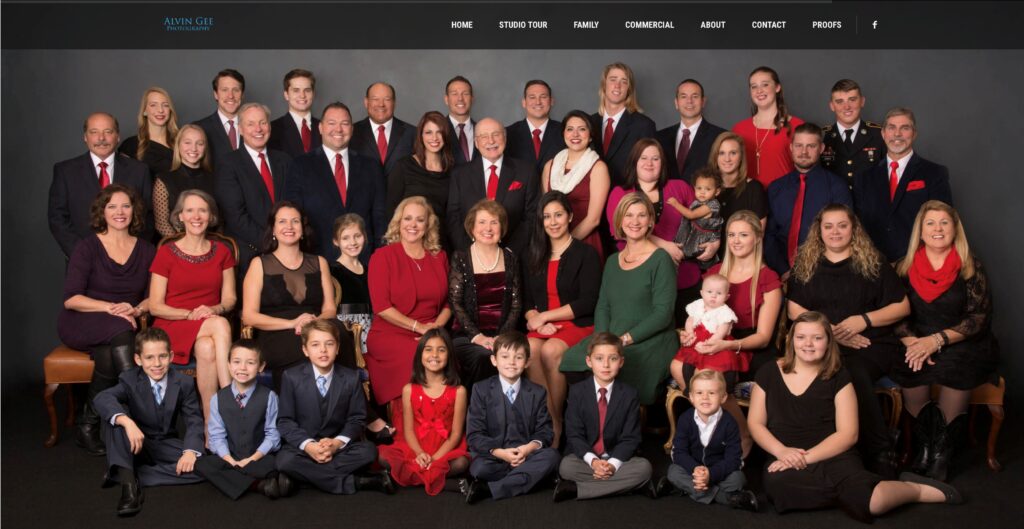
You and your Family are invited to lunch with
“The Family You Never Knew”.
All Cleveland families in Houston are invited to attend a Bar-B-Que lunch being planed for early to mid Spring 2025. Several potential locations are being considered including 1) Houston Arboretum, 2) Herman Park (Zoo), 3) Skylawn ( Old Houston Post Office), 4) Cleveland Park, and others. Registration will be required to determine the potential attendance, exact location and an acceptable price point for food. You prepay online when you register. An attempt to provide scholarships will be made for those that need it. I have no idea to expect 5, 50, or 500 people. Volunteers are needed to help plan the event. If you can volunteer, please send an email to findingthecleveland600@gmail.com expressing your interest and contact information. More information to follow. Other cities may follow.
This is a great time to share a meal and a few hours with our families and new friends.
Where do Texas Cleveland's live.
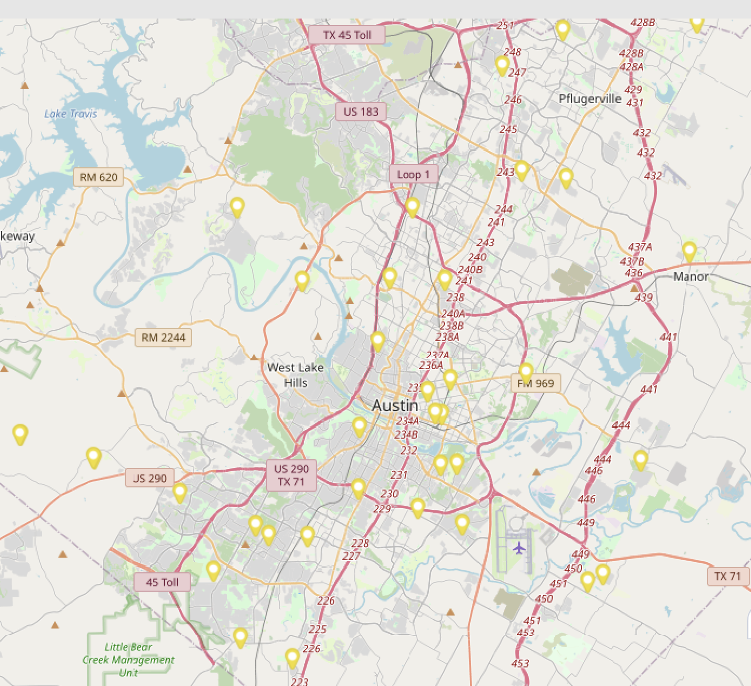
1. The maps below show where 1000+ Cleveland families live.
2.Where do you live?
3. Send an email with your name & contact information.
4. I will add it to the map. (No street addresses shown on map)
5. Email: FindingTheCleveland600@gmail.com
Austin
Houston
Dallas / Ft. Worth, TX

MY FAMILY NAME
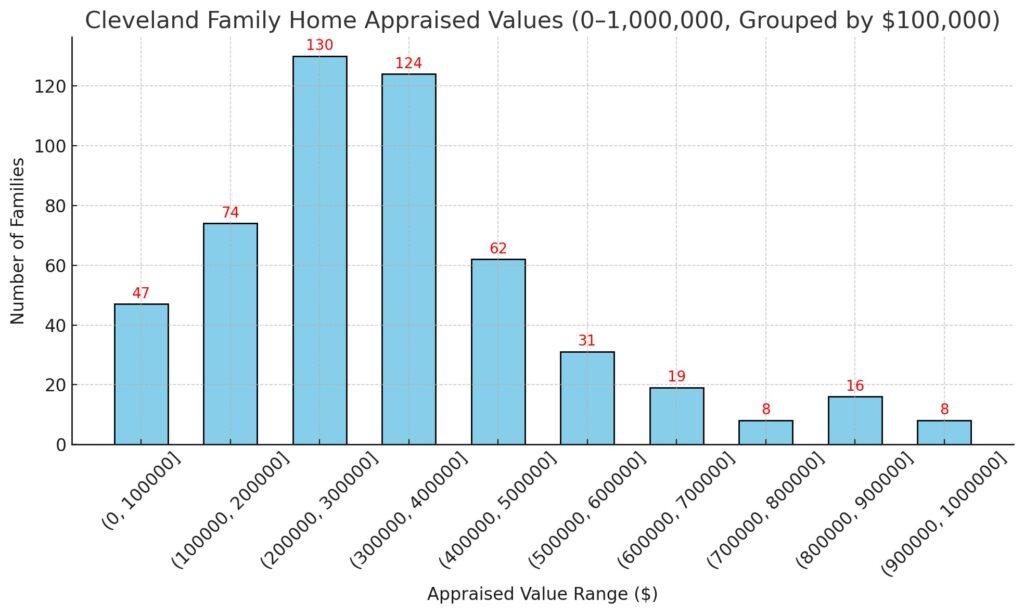
Histogram 1- Texas Cleveland Family Home Appraised Value (21 over $1M)
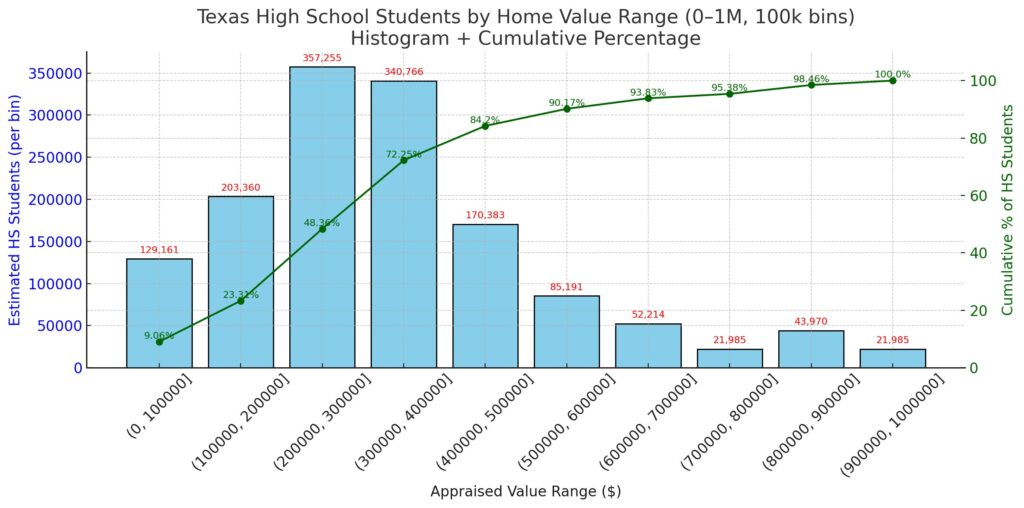
Histogram 2 – Number of Texas High School Students = 1,426,270 (~ same distribution as Cleveland Family)
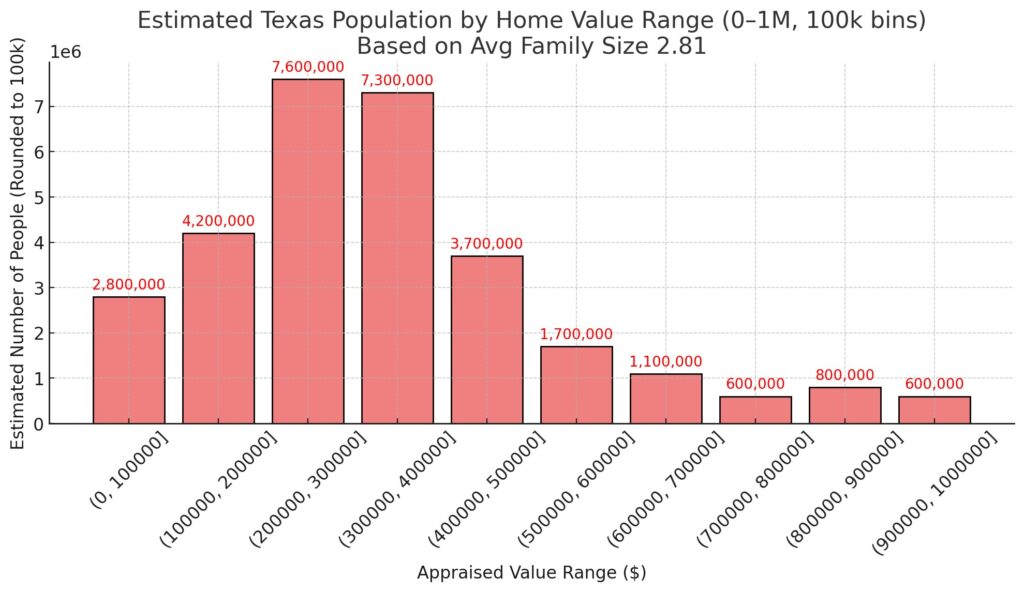
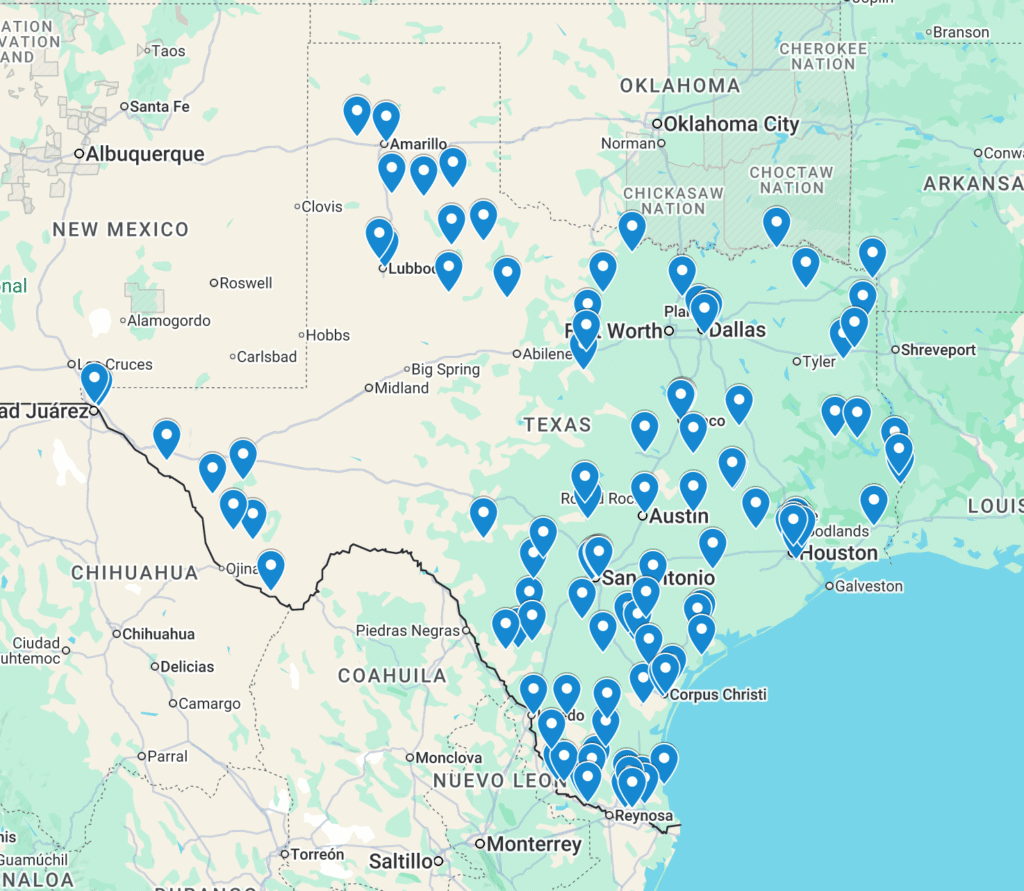

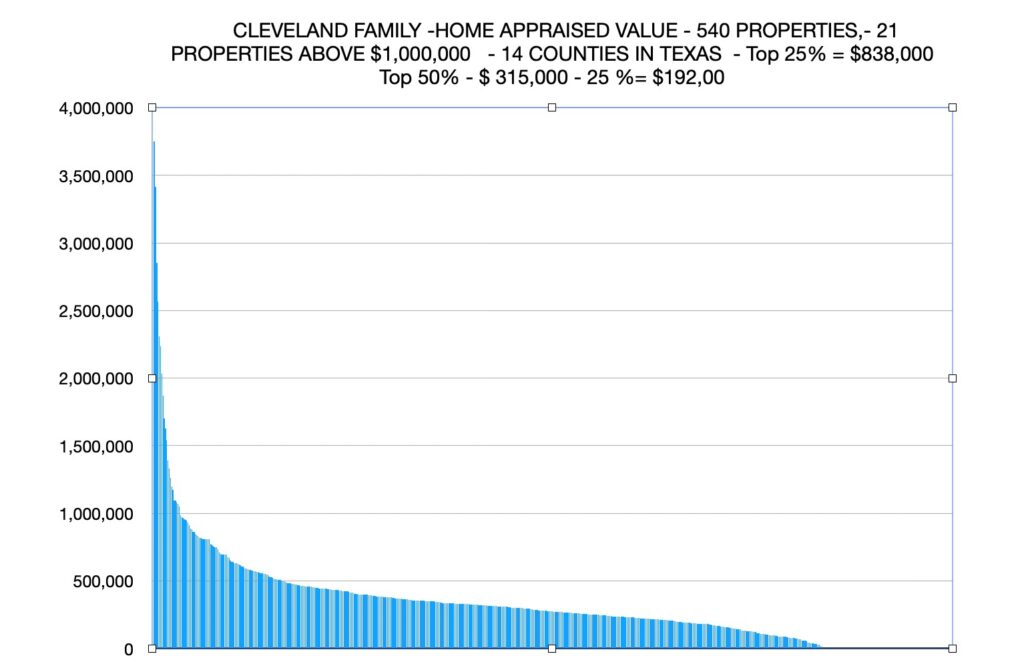
The data for the information shown above comes directly from the County Appraisal Districts. All 256 Texas counties. Counties present their data in many different formats which makes data collection “challenging”. Typically, the owners name & address is given. Some counties display the value automatically, other counties require searches for individual residences which makes data collection much more time consuming. My primary focus was location so not all property values, were obtained. I believe the above house value distribution is representative of the complete sample.
Conditions That Create Financial Vulnerability
- Lack of Education – Families where adults don’t finish high school or college often face limited job options. Many available jobs are low-wage, lack benefits, and have unstable hours. Dependency on multiple part time jobs or gig work. Student loan payments leave little room to build savings. Families without access to higher-wage, stable jobs with benefits, are more likely to fall into the cycle of low income, debt and financial stress.
- Low or Unstable Income – A two-income family loses a job, cutting income in half overnight. Work hours are reduced or seasonal jobs add instability. Families earn below what’s needed for basic living costs such as housing, food, transportation, and childcare.
- High Cost of Living – Housing cost rise faster than wages, childcare, and healthcare often lead to straining monthly budgets. Even full-time workers may fall short of covering essential needs.
- Lack of Savings – A large share of households have less than $500 in liquid savings. Unexpected expenses, like a car repair or medical cost leaves them unable to handle even modest emergencies.
- High Debt – Dependence on credit cards, payday loans, or medical debt makes families fragile. Interest payments reduce disposable income and trap households in cycles of borrowing
- Limited Benefits – Many fragile families lack health insurance, retirement savings, or paid leave. Without these protections, a single illness or job loss quickly undermines stability.
- One Shock Away – A job loss, reduced hours, or sudden expense can trigger eviction, utility shutoff, or food insecurity.
Observations
Our starting point is deeply personal: Cleveland family households in Texas. Histogram 1 shows that many Cleveland’s live in financially fragile situations. These families have worked, served, raised children, and contributed in countless ways, yet their resources often place them in the lower end of the economic spectrum. Their lives remind us that financial fragility does not equal a lack of character, effort, or contribution.
Knowing the total number of High School students in Texas and assuming the state distribution is similar to that for the Cleveland family, we can estimate, Histogram 2, the total number of High School students in each bracket. This is a reasonable assumption since the Cleveland family is similar both in geographically and economically diversity.
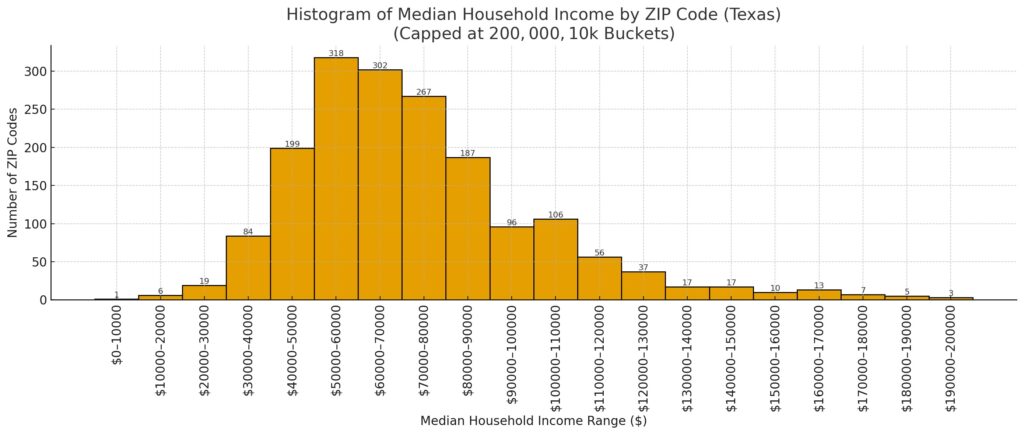
In Histogram 3 , the picture broadens: across Texas, nearly 40% of households face the same fragile conditions. Histogram 4, base on U.S. Census data, shows the median household income in Texas as a function of income. The associated table show typical household income and corresponding household status.
Why are people experiencing this? Some of the conditions that as to why: lack of education, a job loss, an illness or medical emergency, unstable wages, rising costs, and limited savings combine to keep families vulnerable. For many, one setback can push them into crisis. At the heart of this fragility is the barrier to education that leads to stable jobs. Without access to affordable, practical pathways to skills, families remain locked in cycles of vulnerability and frequently poverty.
This progression tells us something important: helping a single household is noble, but it takes more than individual charity to change the trajectory of entire communities. Even a TEXAS SIZE CLEVELAND FAMILY, can’t do the job alone.
This is not an isolated challenge of one family or one name — it is the lived experience of millions of Texans.
What’s needed is opportunity at scale. And in today’s America, opportunity comes most reliably through education that leads directly to jobs.
For generations, the message was simple: Go to college, get a degree, and success will follow. But the data, and the lived experience of millions, tell a different story. There is an imbalance: while scholarships for traditional four-year colleges are widely available, far fewer resources exist for students from financially fragile families, who would thrive in trade schools, apprenticeships, or new-collar job training. The result is not just inequity, but a missed opportunity — because these are the very careers most in demand, offering wages that rival or exceed bachelor’s degree jobs, and stability that families urgently need.
The American Dream has always been about more than material wealth. It is about dignity in work, building a career, respect in community, and the chance to build a stable life for one’s family. For today’s generation, that chance requires realigning our support for education — so that whether a student chooses college, an apprenticeship or a trade, the path is equally supported.