There is no place like Home
Click on Photos
Ancient History - There is no place like home!
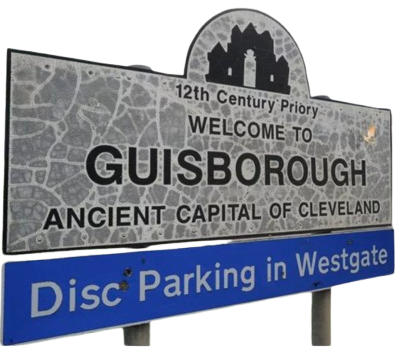
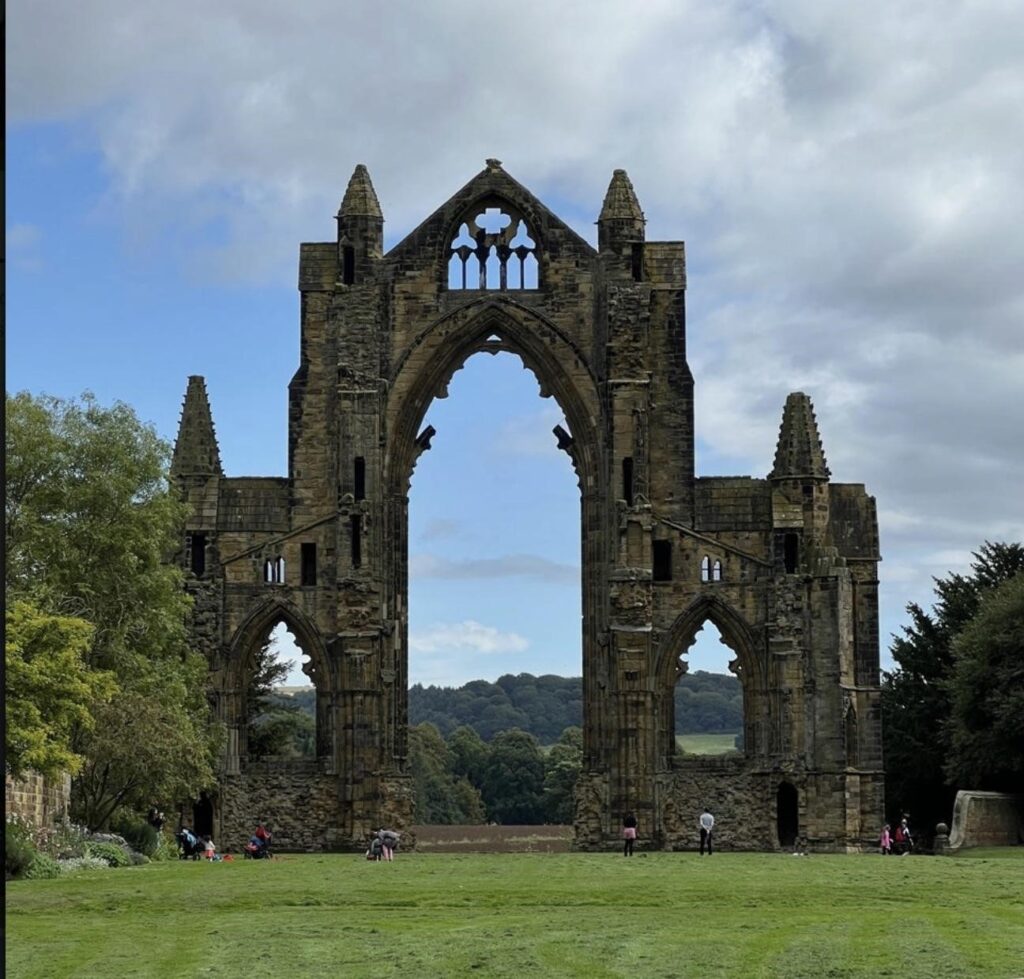
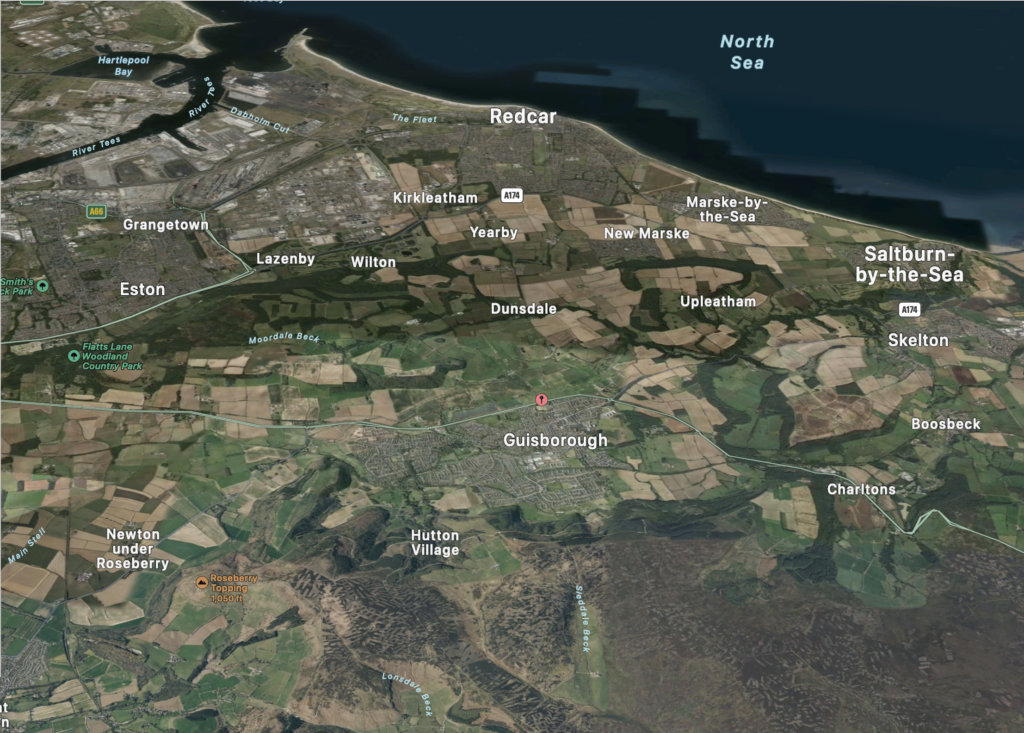
At the end of Anglo-Saxon period in Britain in 1066 A.D., to Thorkill de Cliveland, patriarch of his family, home was his main Castle, in Skelton, England, a short distance from Guisborough, the ancient capital of Cleveland, in the Cleveland Hills. The nearby river Tees and the North Sea provided Vikings ample access to the area. All land belonged to the King. Thorkill and his son Uctred were large estate “proprietors” which included several manors. In 1066, William of Normandy, invaded England and the Battle of Hastings changed England forever. William became known as William the Conqueror. As in any war, those people allied with the winning side do well, and those that do not support the winning side …. William needed support to maintain civil rest. These supporters needed to be paid and many were give land grants for their support and collecting taxes on the people. One of his supporters, Robert de Bruce was rewarded for maintaining law and order in the northern areas near Yorkshire. Robert was granted 52 Manors for his support. Several of those manors were originally owned by the Cleveland family. Thorkill and his oldest son Uctred were killed during this time. Robert de Bruce, was given the main castle and called himself Lord of Cleveland and the castle retained the name Cleveland. One of his descendants became the first King of Scotland. According to legend, Willam the Conqueror granted a lesser estate in Ipswich to a Cleveland descendant. The exact relationship between Thorkill de Cliveland and those descendants in Ipswich is uncertain. The two main Cleveland lines in the United States, the “New England Clevelands” and the “Southern Clevelands” both originated from Ipswich in the 1600’s, and are believed to be related. Ipswich is a village on the river Orwell and the North Sea with Viking roots.
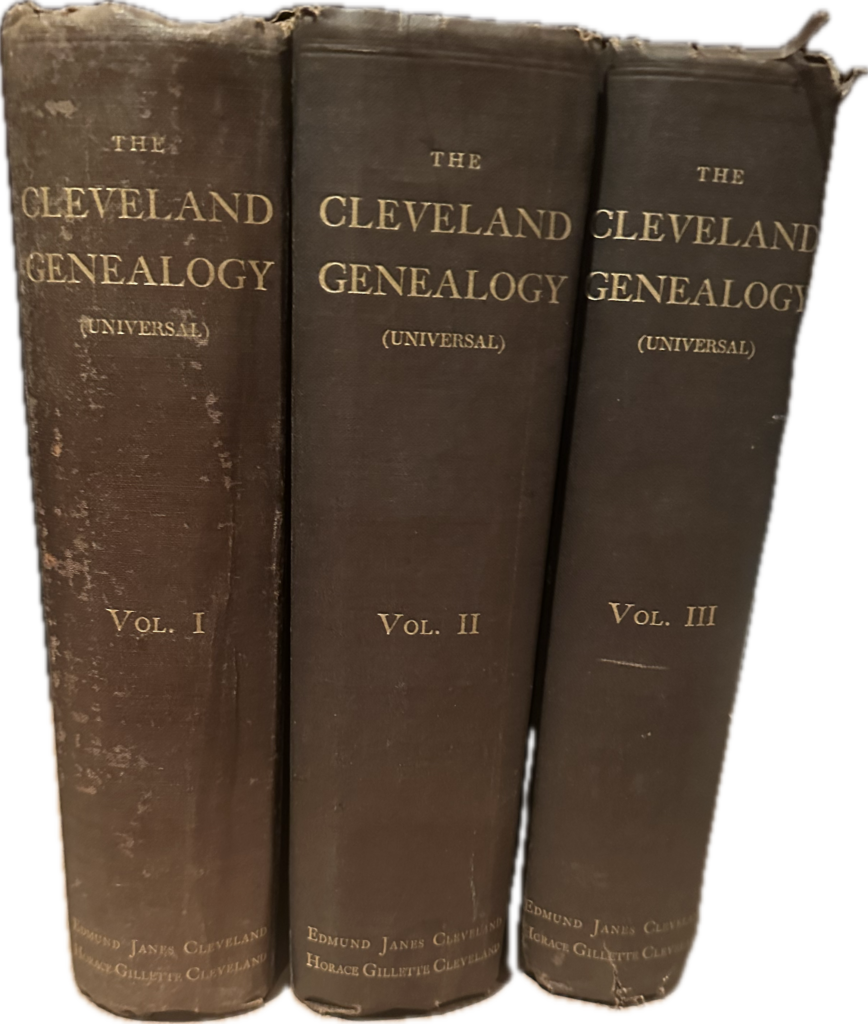
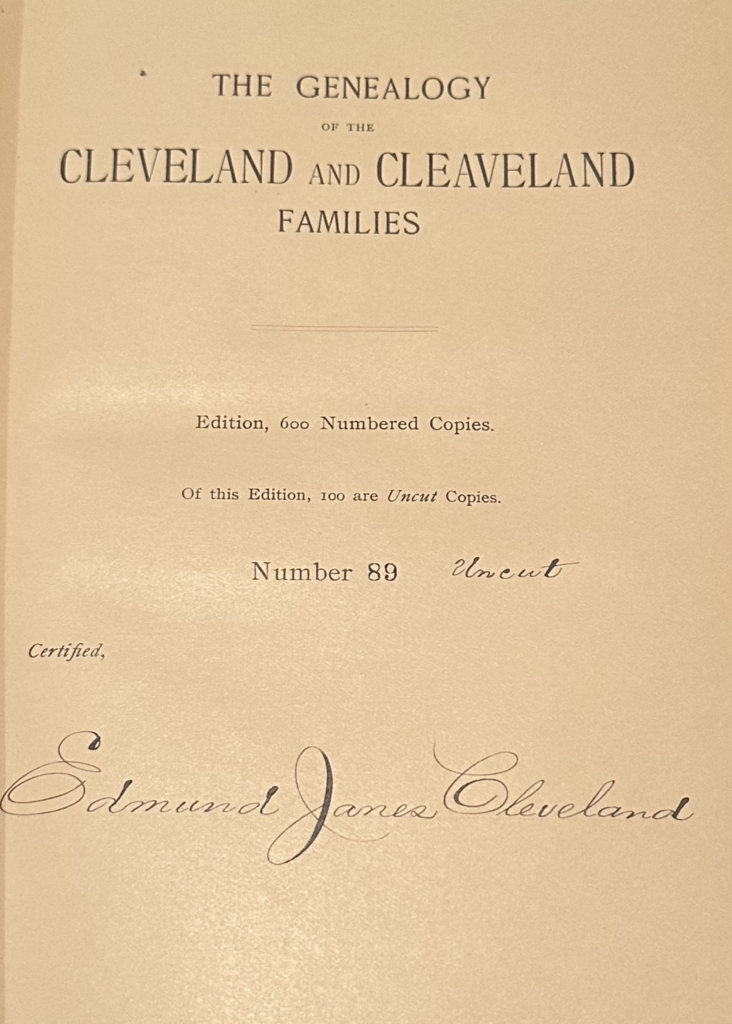
In the late 1800’s and early 1900”s, millions of people emigrated to the United States and America became known as the “Melting Pot of the World”. People want to be known as “Americans”. At the same time they thought about their families in the “Old World” and a tremendous interest in genealogy developed with many family genealogies being published. In 1899, two years after Grover Cleveland left office as President of the United States, the “Genealogy of the Cleveland and Cleaveland Families” by Edmund Janes Cleveland, was published. This included both genealogy information as well recognition of cities, counties, streets and parks named Cleveland. During this time, many children were give the name Cleveland as their first or middle name. The genealogy was a limited edition of 600 numbered copies.
Help find the original 600 copies of “The Genealogy of the Cleveland and Cleaveland Families"
Edmund Janes Cleveland published an extensive Cleveland genealogy in 1899. The genealogy was published in three volumes, has 2893 pages and nearly 20,000 names. The edition published in 1900 includes a few supplement pages and has 2904 pages. It has numerous descriptions of many of the people, both living at the time as well as biographical sketches of their deceased loved ones. Some descriptions are rather lengthy and others are extremely short.
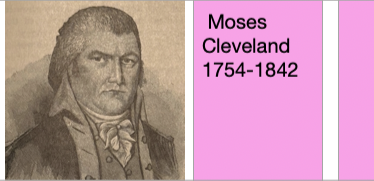
The Cleveland/Cleaveland families in the United States are generally divided into the “New England Clevelands” branch and the “Southern Clevelands” branch. Moses Cleveland, the common ancestor of the “New England Clevelands” came from Ipswich, England in 1635 at age 11, and is recognized as the first Cleveland to come to the “British Colonies”. Moses had seven sons and five daughters.
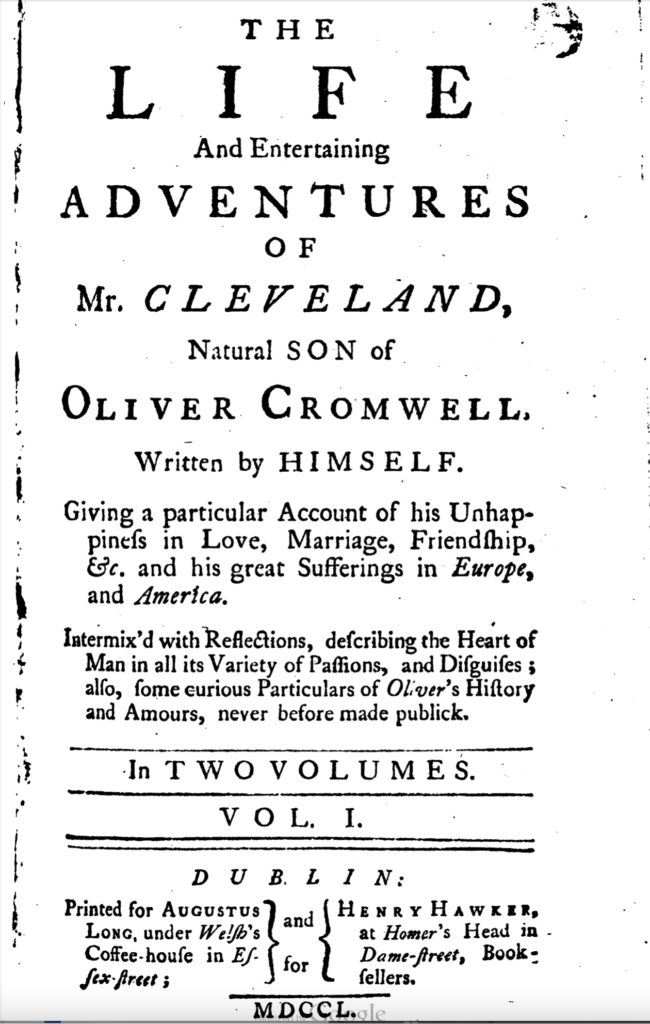
Elizabeth Cleveland, is the common ancestor for the “Southern Clevelands” and also lived in Ipswich at the same time as Moses Cleveland. They are assumed to be related, however, the exact relationship is not known. When the son of Elizabeth, (William) grew up, he chose to take his mother’s maiden name. A book originally published in 1741 indicated the father of Elizabeth’s child was Oliver Cromwell, “Lord High Protector of England”. Elizabeth’s two grandsons, Alexander Cleveland and Roger Cleveland, came to Virginia about 1669 with the exact dates in debate. Modern advanced Y-DNA data tends to refute the Oliver Cromwell connection.
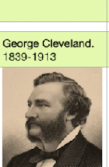
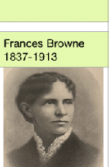
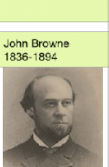
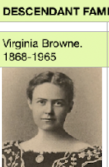
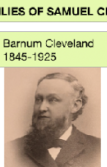
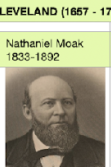
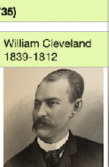
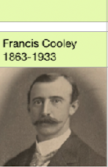
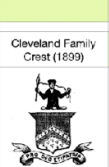
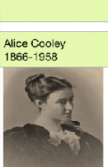
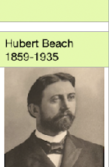
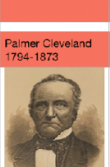
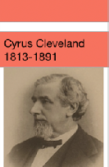
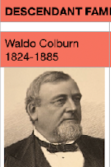
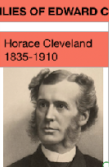
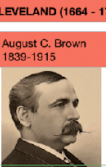
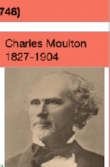
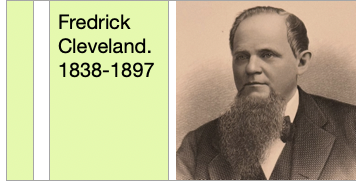
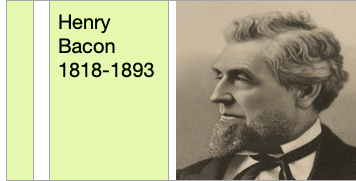
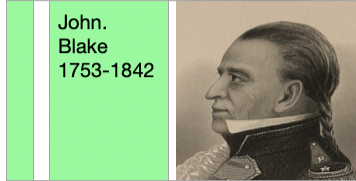
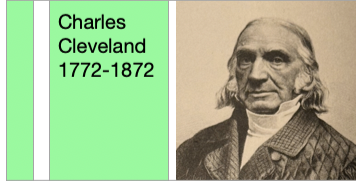
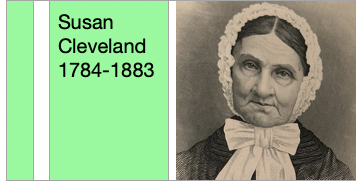
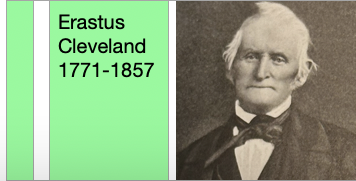
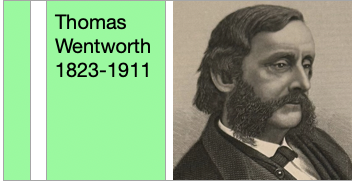
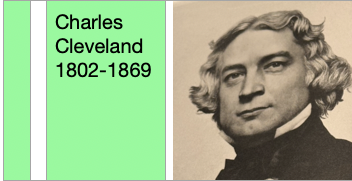
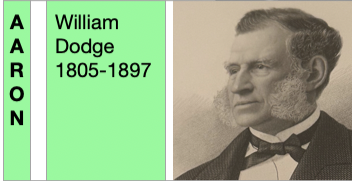
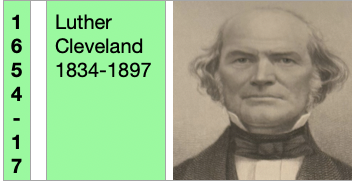
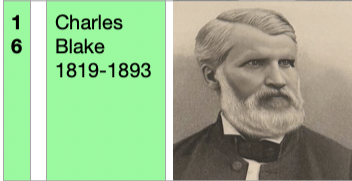
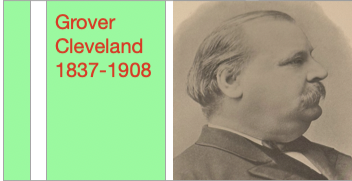
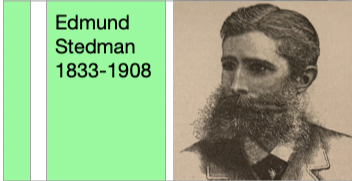
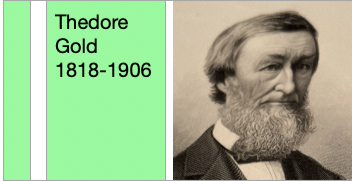
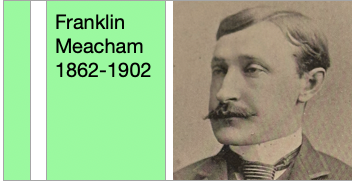
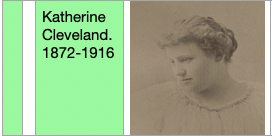
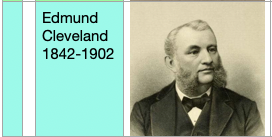
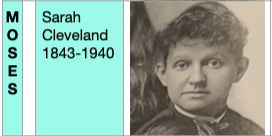
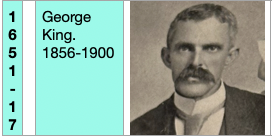
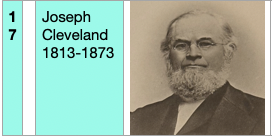
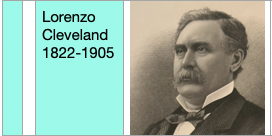
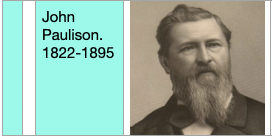
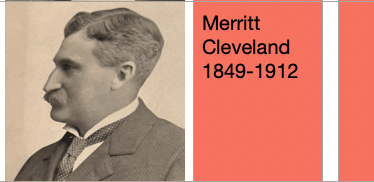
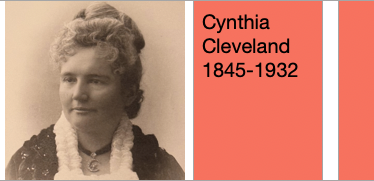
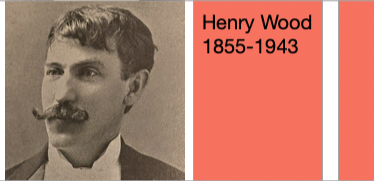
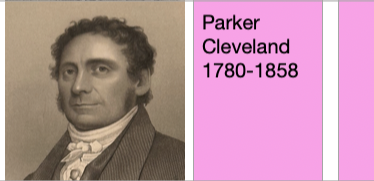
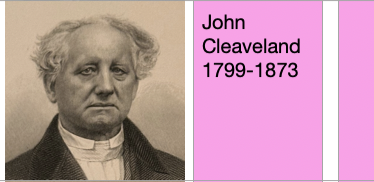
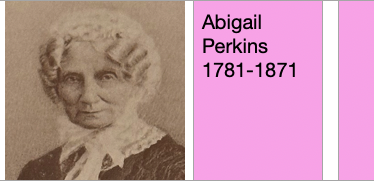
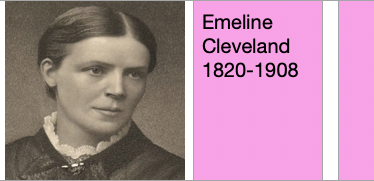
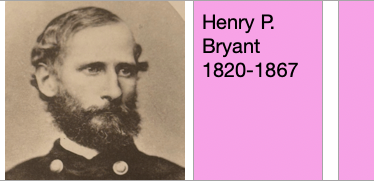
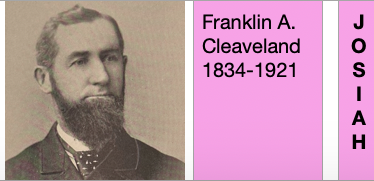
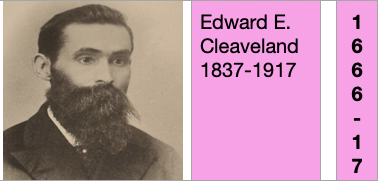
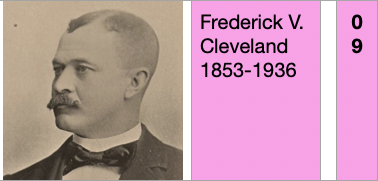
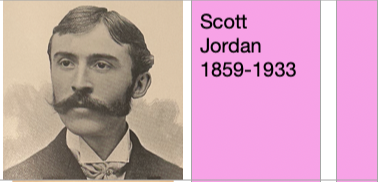
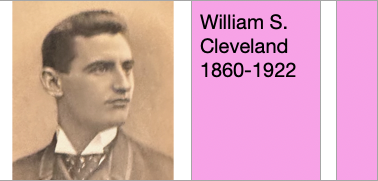
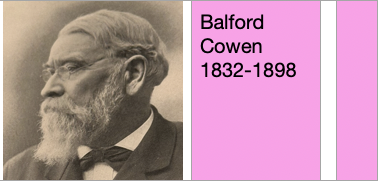
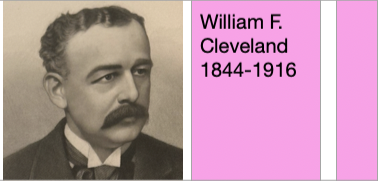
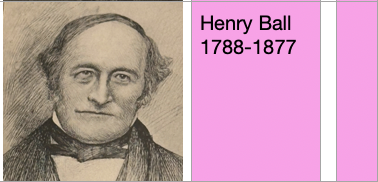
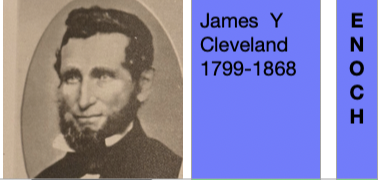
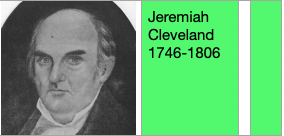
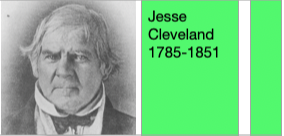
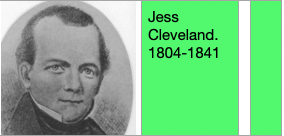
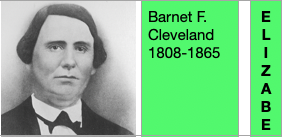
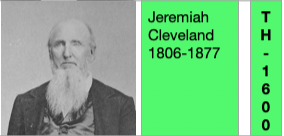
The 70 portraits and tributes shown above are of various Clevelands, mostly descendants of Moses or Elizabeth, as well as their extended families. There are also mention of various places of interest with the name Cleveland, such as cities, counties, streets, and businesses as well as mention of type of business in which people were employed.
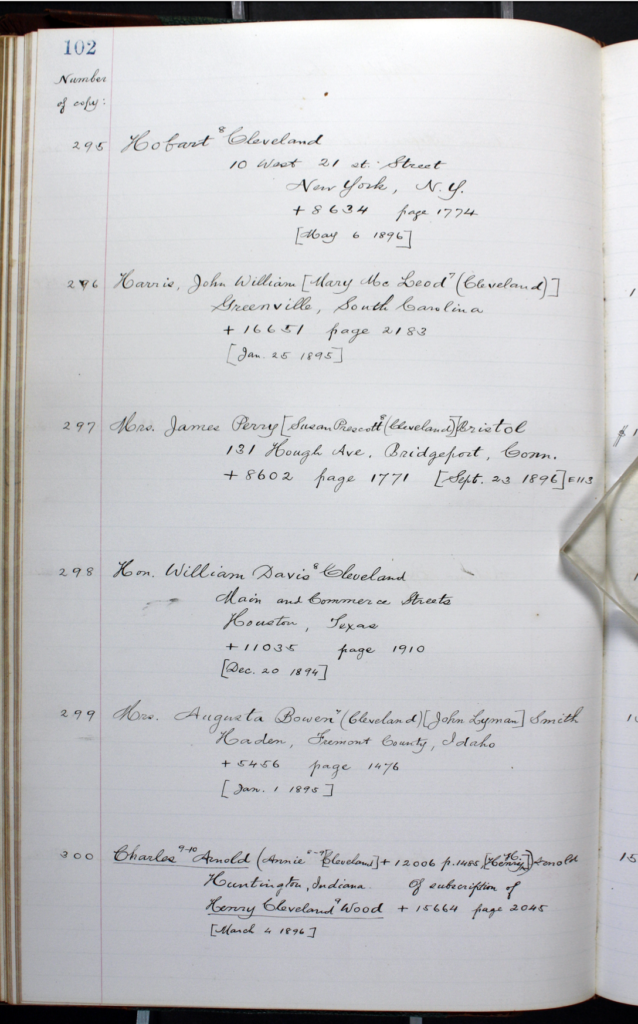
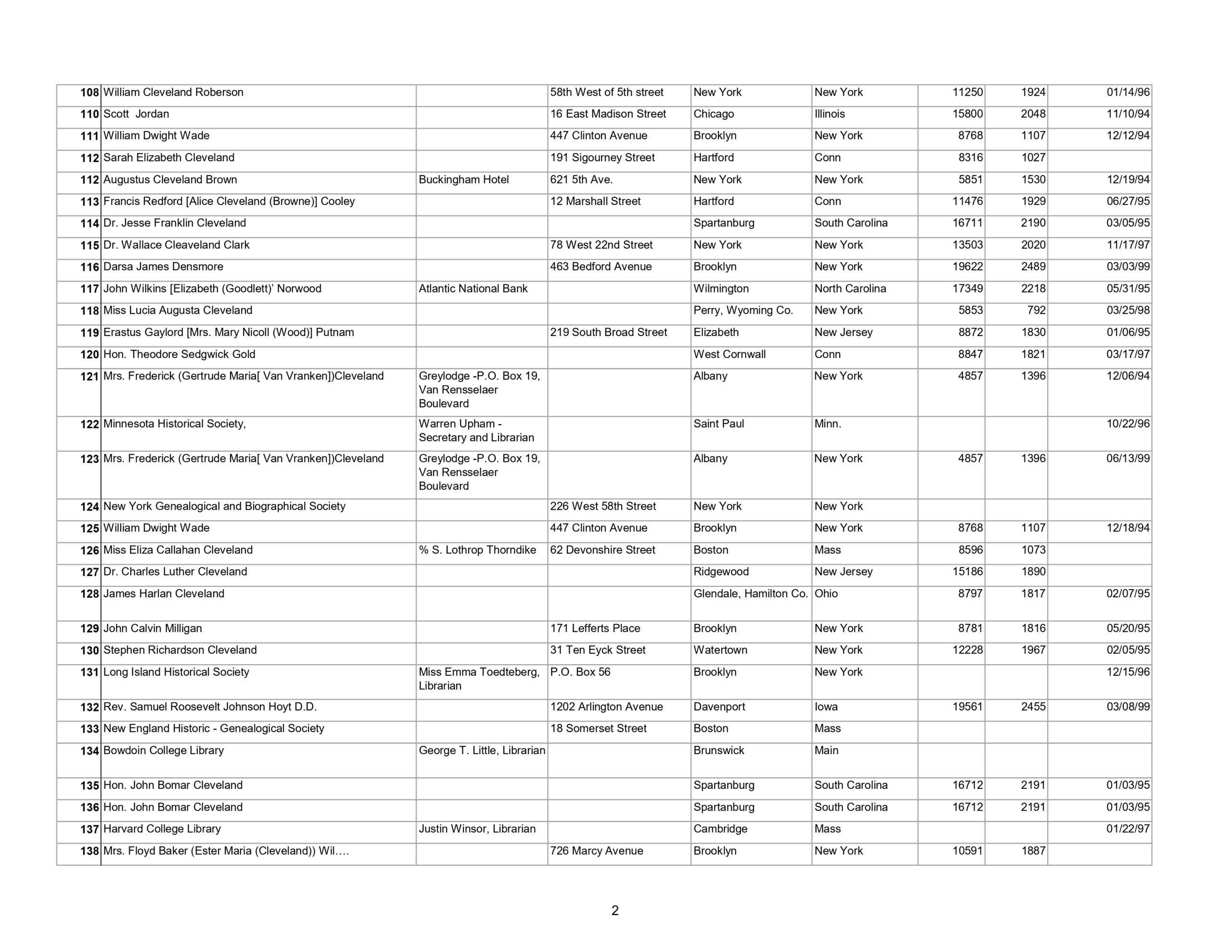
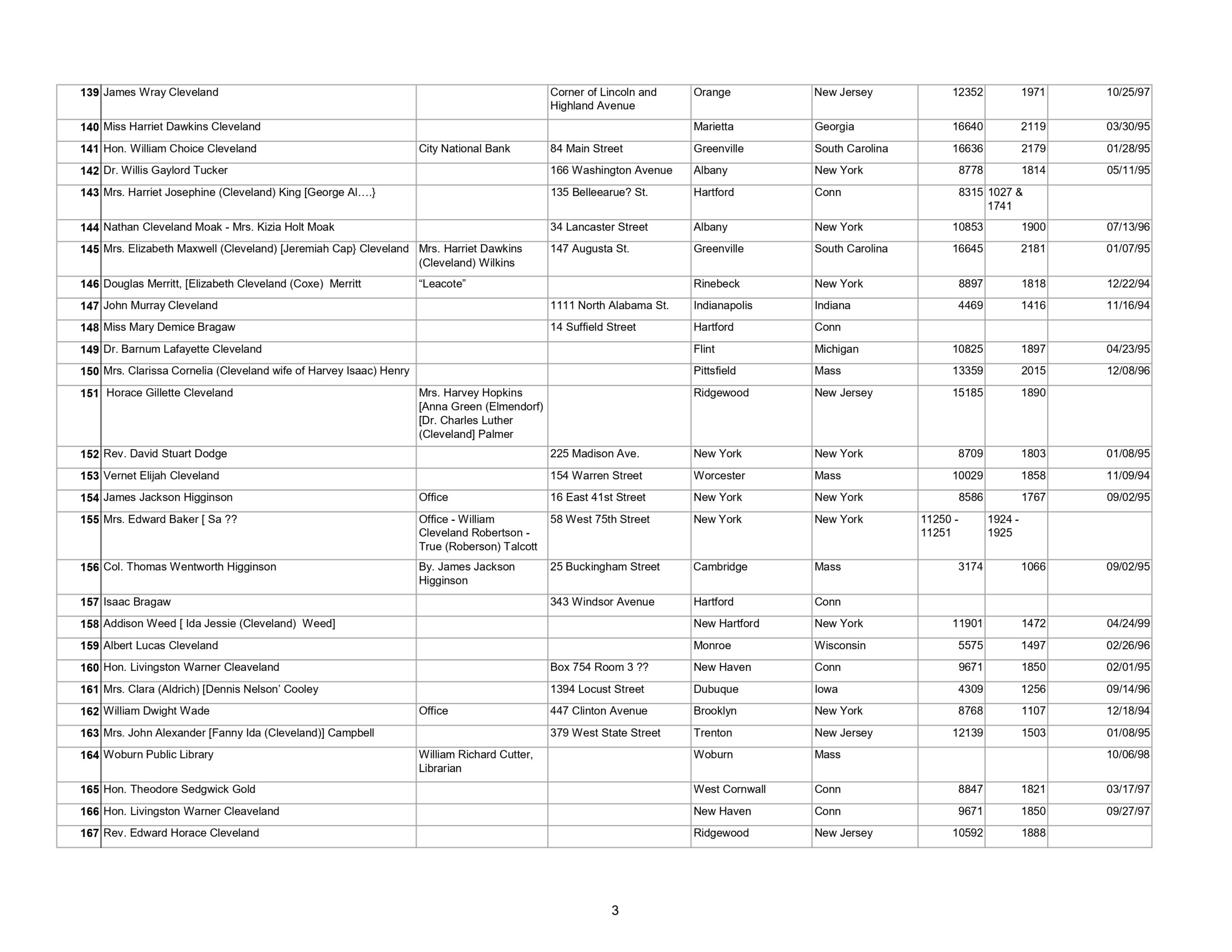
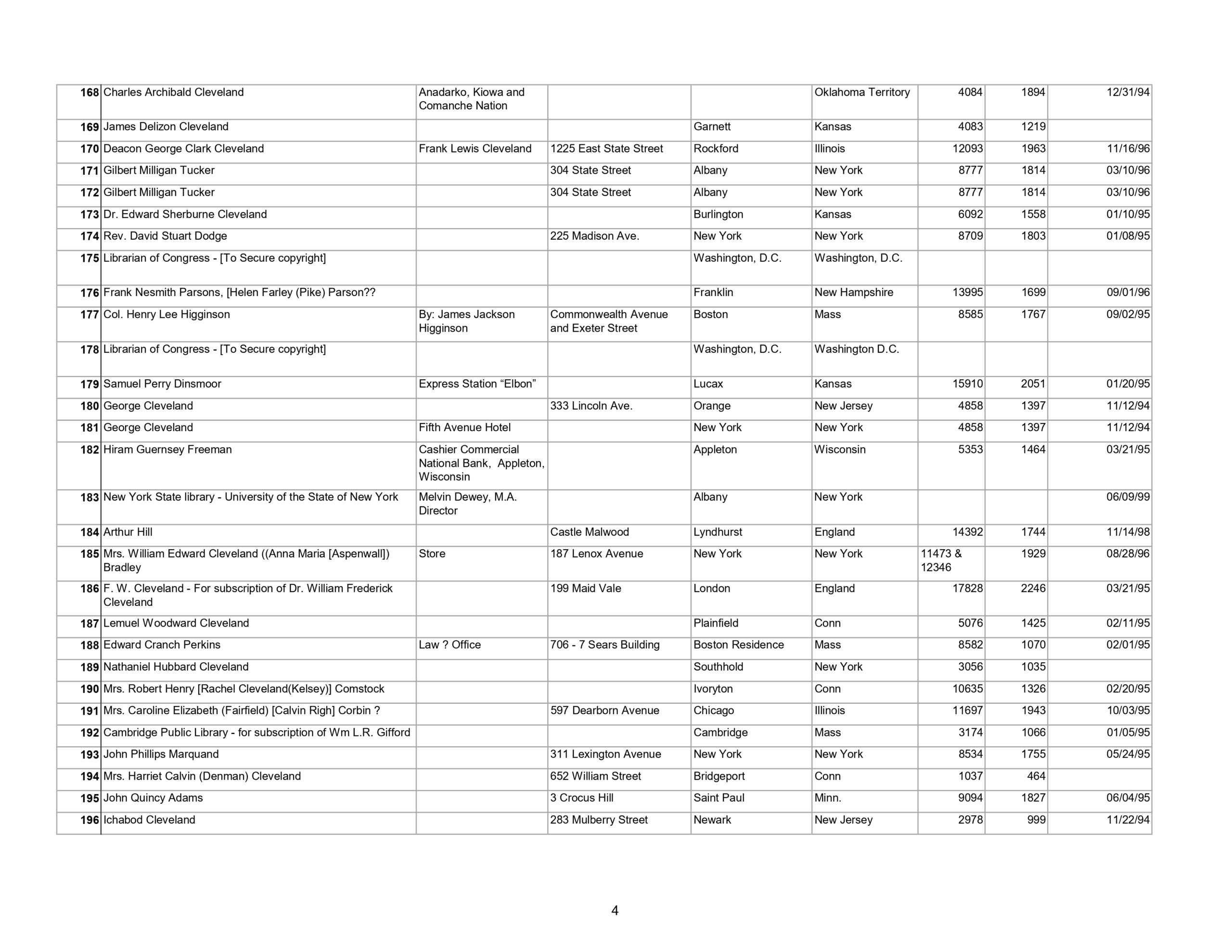
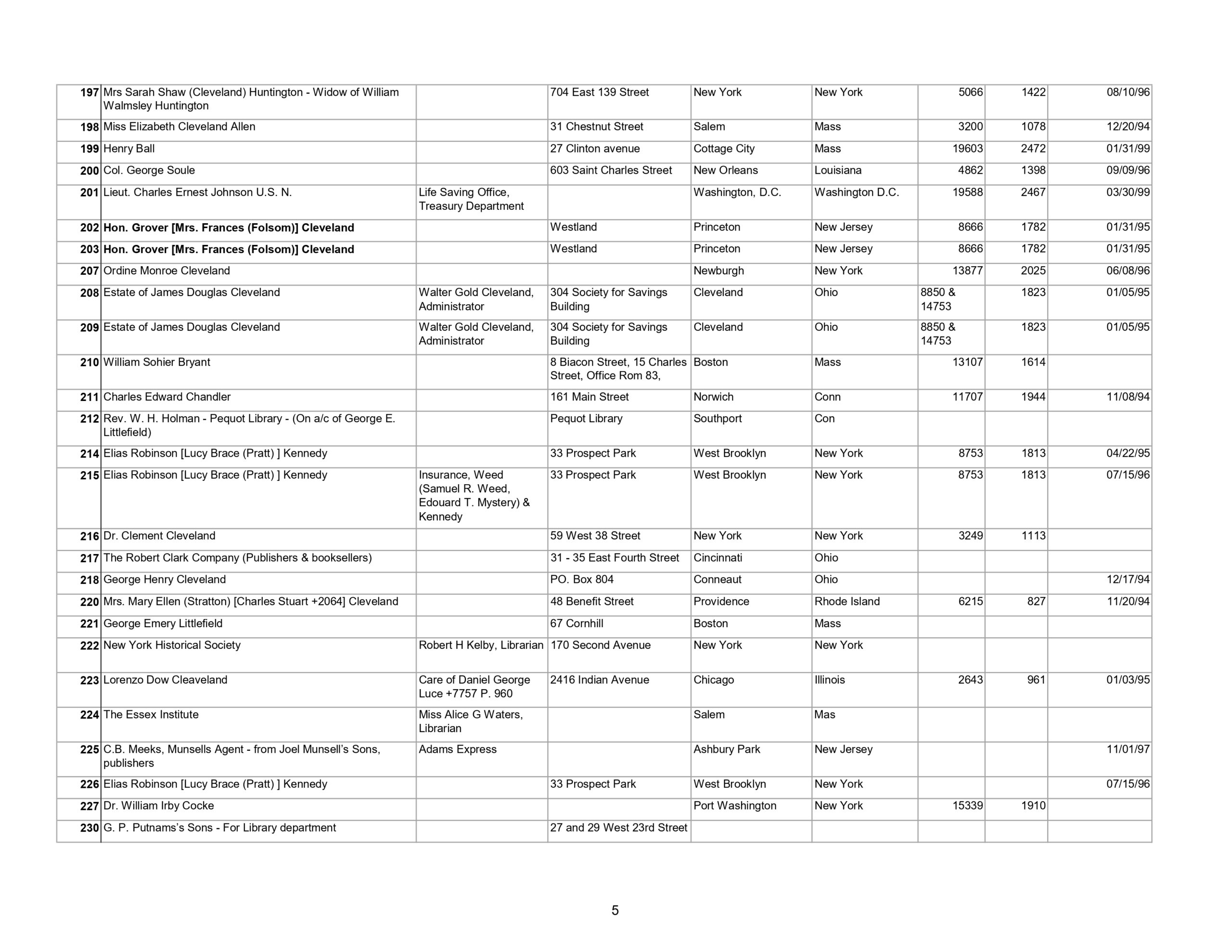
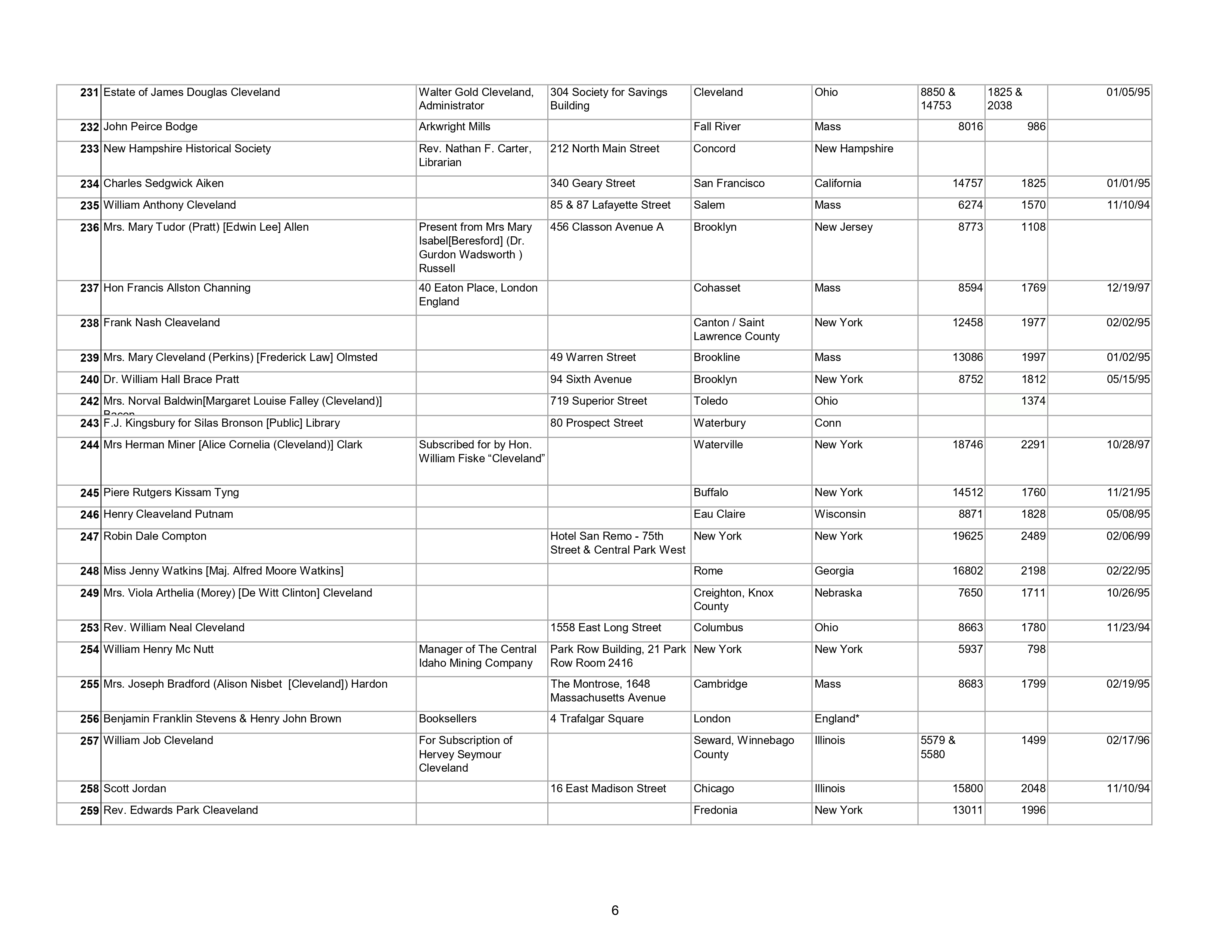
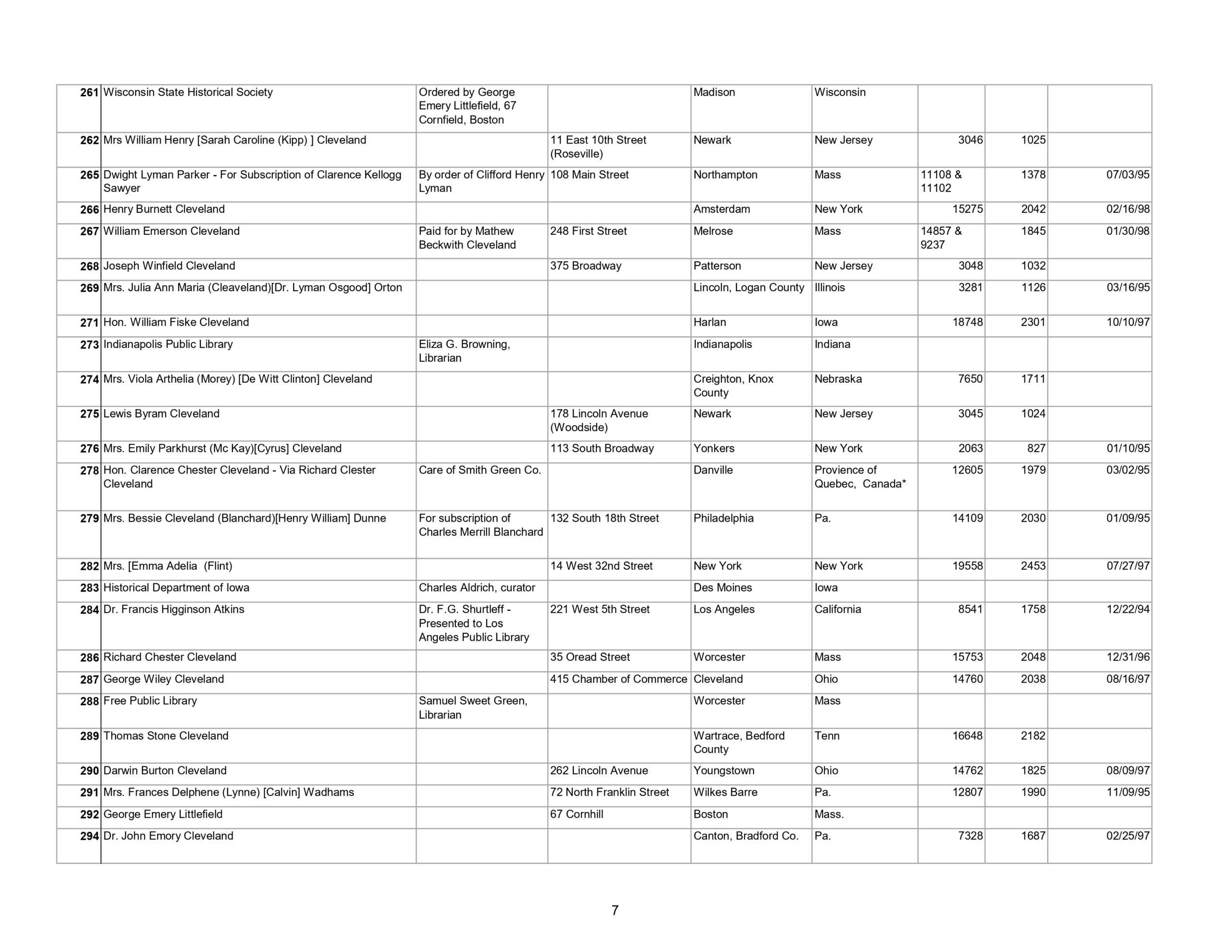
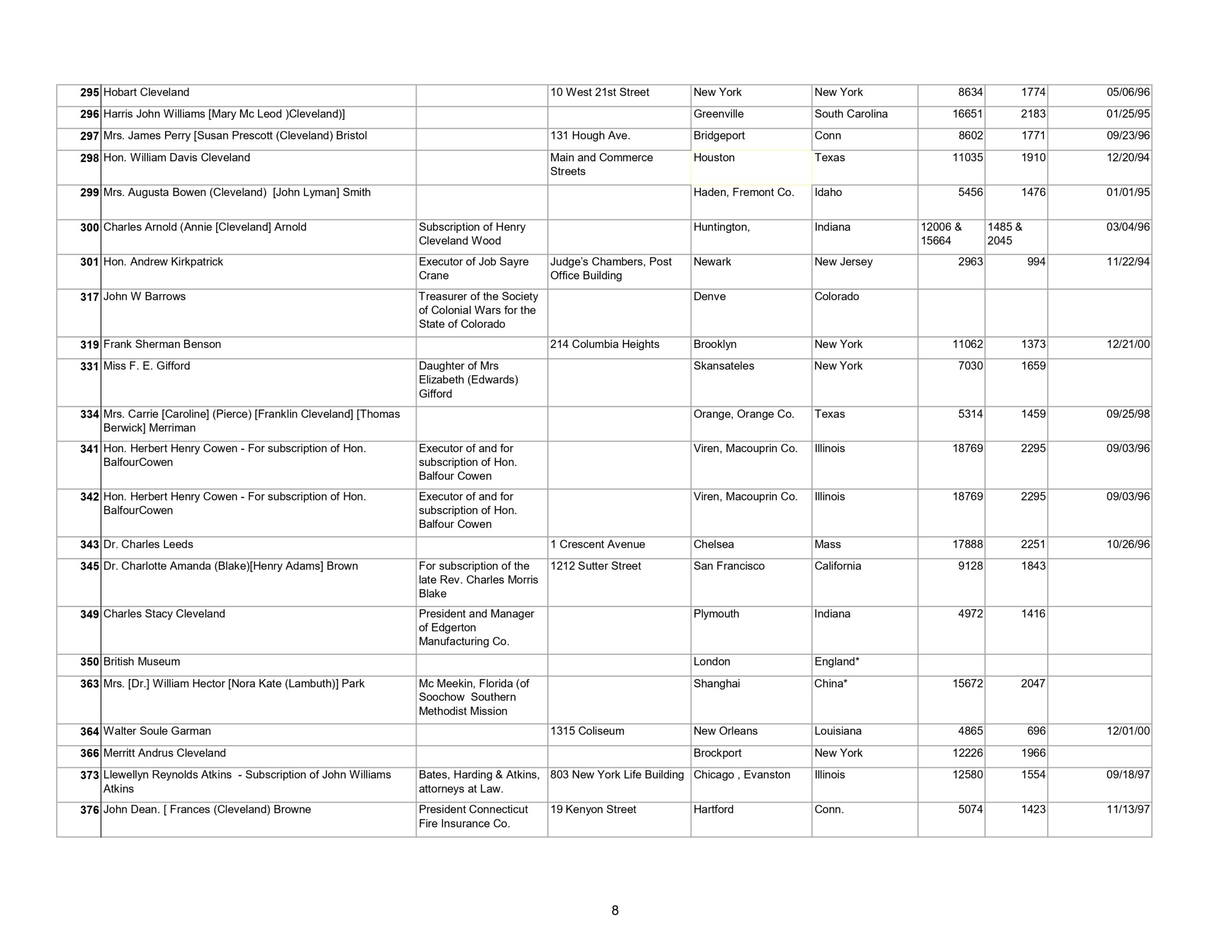
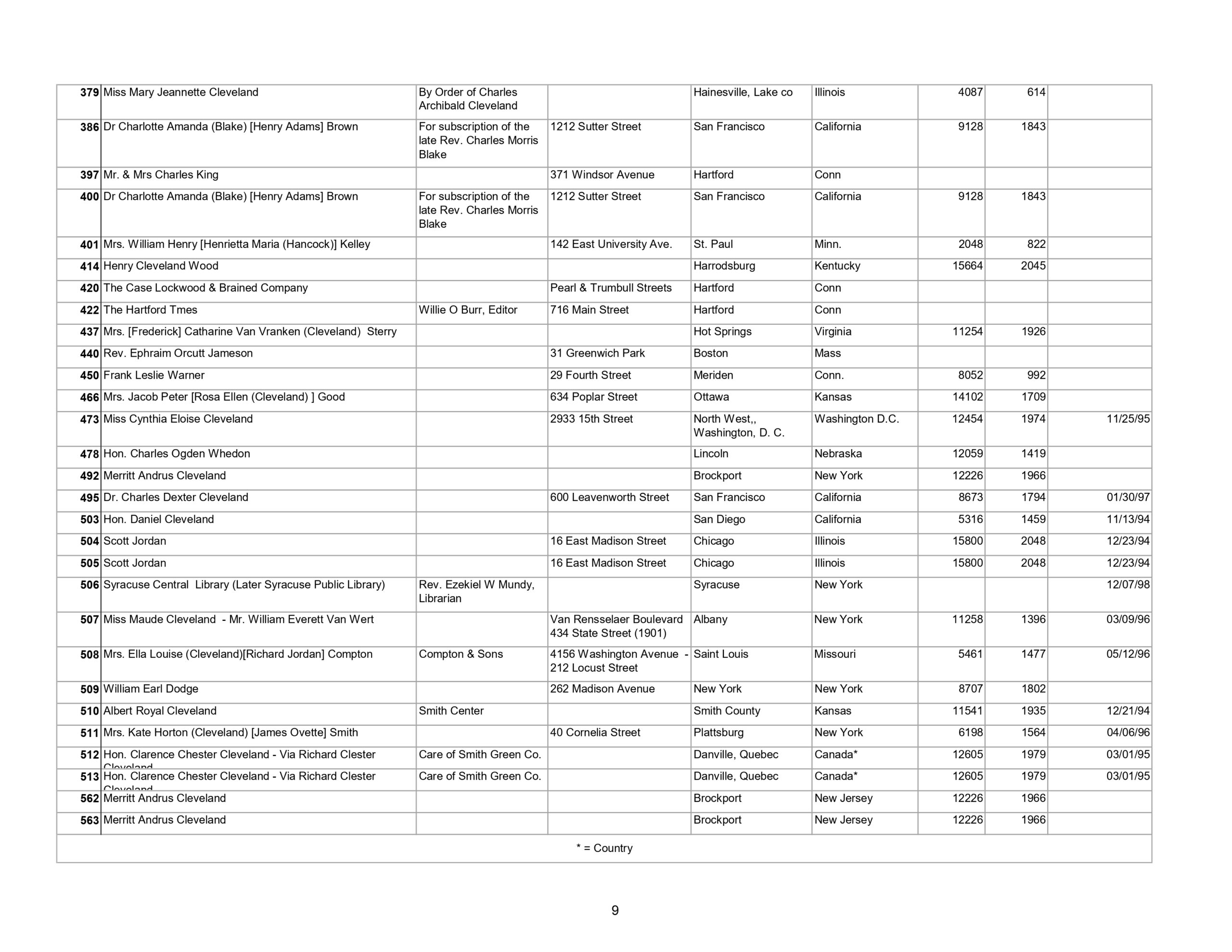
In 1899, the basic set of three volumes of the genealogy sold on a subscription basis for $18.00. There was a choice for extra binding for an extra cost and for color. The extra binding choices were Sheep, Half Turkey, Full Turkey, and Uncut. Edmund Janes, also kept a record of those people who subscribed to the genealogy so that he could send the genealogy to the subscribers when completed. The first subscription was sold November 8, 1894. An example of a page from the Record of Purchase is shown below.
Note 1: The copy number of the genealogy is located in Volume 1 before the first page, and before the engraving of Edmund Janes Cleveland.
Note : If you own an original copy please email the following to: findingthecleveland600@gmail.com
1) Photograph of page with the copy number
2) List: Owners Name
3) List: Owners City, State, Country
4) Owners email address
5) Grant permission to use Copy number and Owner City and State to create a map to showing location Owner.
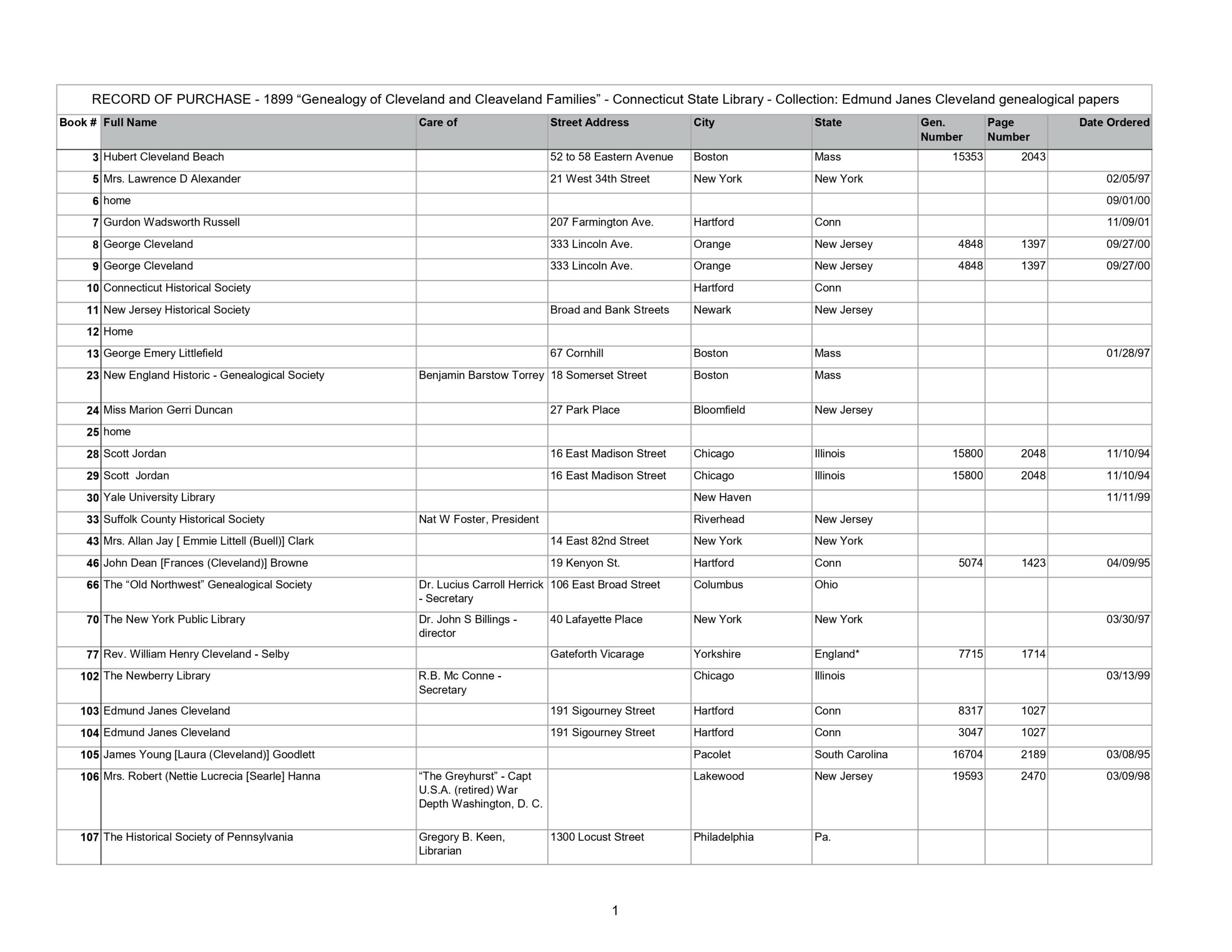
Note 2: The Record of Purchase shows copy number and contact information for subscribers to the Cleveland Genealogy. Date of subscription, page number in the genealogy, and genealogy number are also shown.
Introduction - “Biographies and Portraits”
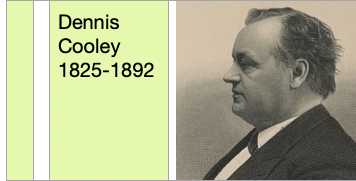
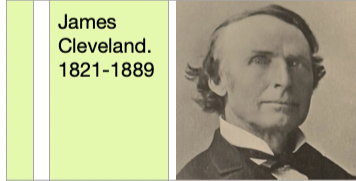
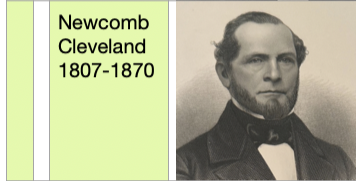
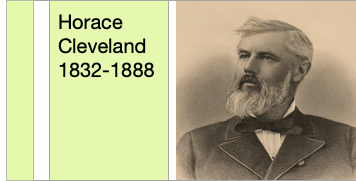
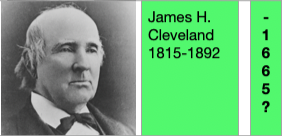
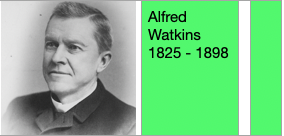
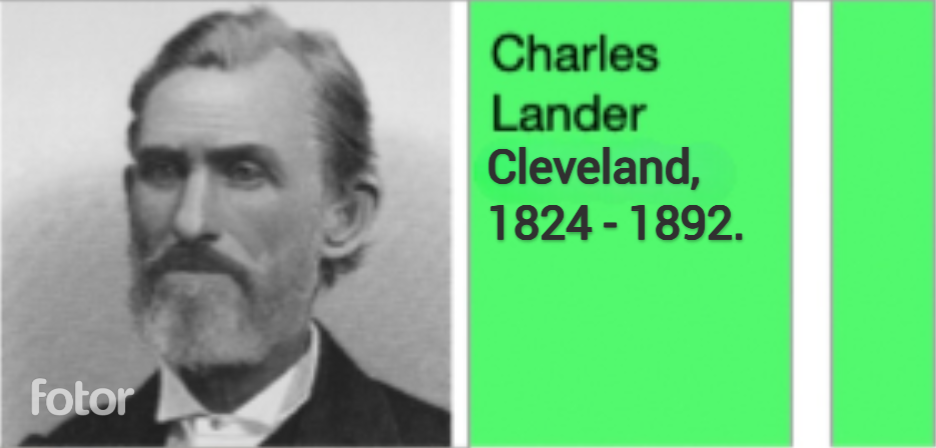
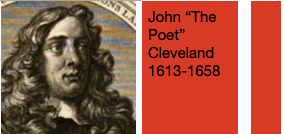
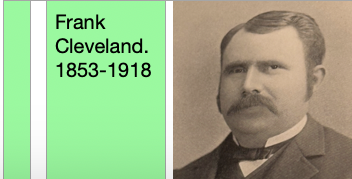
“The Genealogy of the Cleveland and Cleveland Families” also includes portraits of 70 Cleveland’s and their extended family members. Shown above are the portraits included in the genealogy. Biographies were usually included with the portraits. The portraits are grouped according to which son of Moses Cleveland the person is descended. The name of the person along with their dates of birth and death are also shown. Another section in this website, will have biographies of people in the last 100+ years. Please consider submitting a biography to honor others.”
Click on a portrait above and the description/biography associated with the portrait is shown.
The text is the same as presented in the original genealogy. However, to make reading the biographical sketch more convenient, some extremely long paragraphs are broken into multiple paragraphs. Abbreviations, many of which are today uncommon, were frequently used, so for some abbreviations the complete word was used. There was a charge for having a portrait/biographical sketch included in the genealogy. The length of the biography varies greatly.
In writing a genealogy, if you make a mistake, the living relatives let you know quickly and want you to correct any errors. Also, if some of your family names have been left out, you may want these names included in a subsequent edition.
After publication of the three volumes, people wrote and informed Edmund Janes Cleveland of a variety of issues. With this in mind, he started writing Volume IV, a Supplement to the “Genealogy of the Cleveland and Cleveland Families”. Edmund Janes Cleveland died July 9, 1902, in Hartford, Connecticut, before completing Volume IV, which consists of his unfinished 600-page handwritten manuscript. At the time of his death, all copies of the genealogy had not been sold. His death resulted in the Record of Purchase no longer being maintained. The record of purchase shows the original 245 buyers. The “Genealogy of the Cleveland and Cleveland Families” was limited to 600 individually numbered copies.
The Record of Purchase and Volume IV are part of the “Edmund Janes Cleveland Genealogical Papers.” The papers were purchased by the Connecticut State Library, in Hartford, Connecticut, on January 4, 1945, from Cedric W. Case. This volume has never been printed. It supplements Vols. I – III, compiled by Edmund Janes Cleveland and Horace Gillette Cleveland. The complete set of papers consists of five oversize ledger-size books. Permission was granted to photograph and publish Volume IV and the Record of Purchase.
If you wish to share information, please be sure to give appropriate ownership credit.
The Cleveland Legacy Poster
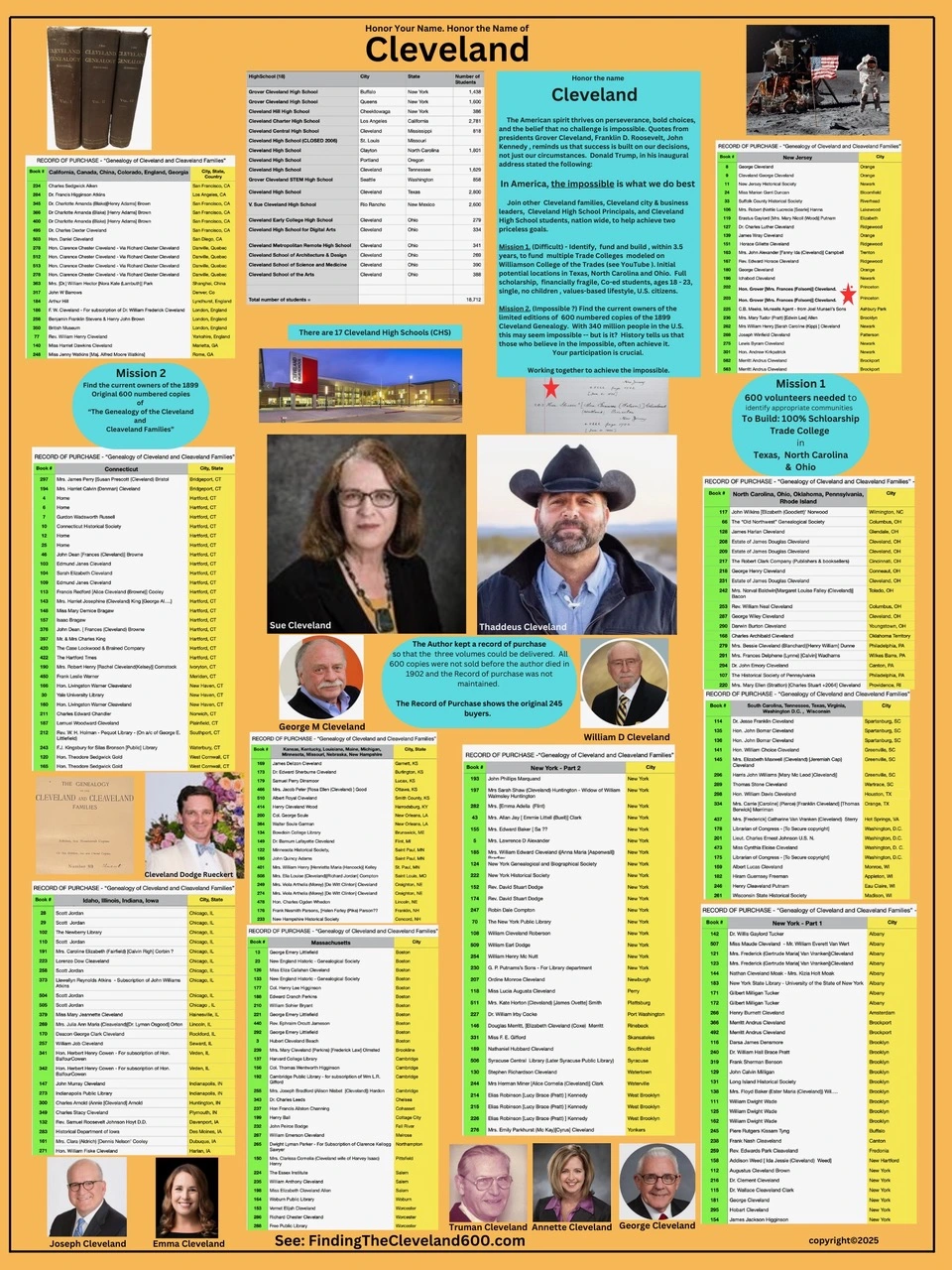
The Cleveland Legacy Poster, shown above, invites people from all walks of life – especially those connected to the name Cleveland – to unite behind two missions.
Mission 1: 600 volunteers
Find 600 volunteers to identify, fund, & build Trade colleges where needed and have statewide support.
Mission 2. Find 600 copies of Cleveland genealogy.
Find 600 numbered copies of the “Genealogy of the Cleveland and Cleaveland Families” and honor past, pass present and future Cleveland Leaders
The poster highlights the diversity of Cleveland namesakes—schools, families, leaders—and the American spirit of perseverance that drives this project. It’s a call to action: If your name is Cleveland, or if your roots or school are tied to it, you can help.
Visit FindingTheCleveland600.com
Join others in working together to achieve what was once thought impossible—and leave a legacy worth honoring.Visit FindingTheCleveland600.com
Join others in working together to achieve what was once thought impossible—and leave a legacy worth honoring.
Note: If you know of a location open to the general public, please ask if the poster can be displayed in their place of business. The poster can be downloaded as a PDF file and is 18” x 24” in size.