Cleveland Hoadley Dodge
(1860 - 1926)
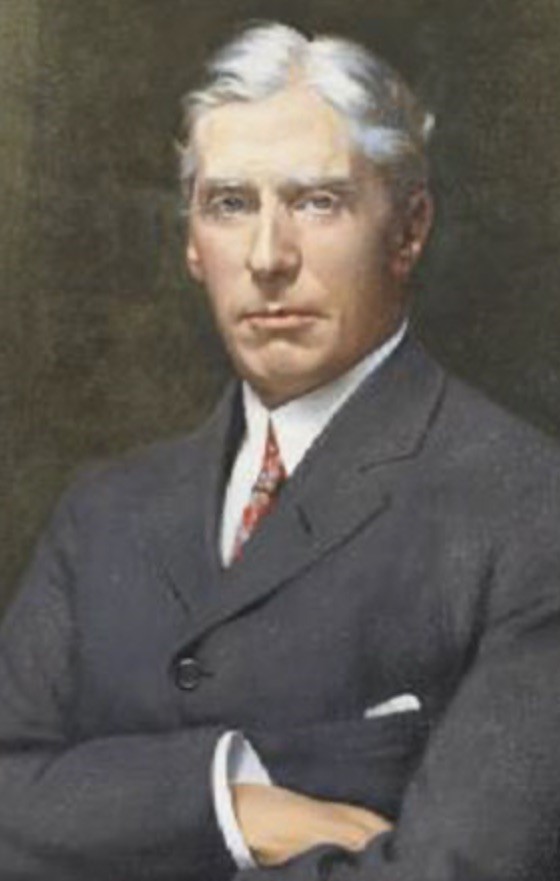
Cleveland Hoadley Dodge (1860–1926) was an American businessman, philanthropist, and close advisor to President Woodrow Wilson. Known for his role in the copper industry, he was also a committed supporter of education, humanitarian efforts, and international aid. Dodge’s influence and legacy endure through his significant contributions in business and philanthropy, particularly through the Cleveland H. Dodge Foundation, which he established in 1917 and which remains active today.
Cleveland Hoadley Dodge was born on January 26, 1860, into a well-established New York family known for its wealth and civic-mindedness. His grandfather, William Earl Dodge Sr.,, the son of David Low Dodge and Sarah Cleveland, was a founder of Phelps Dodge Corporation, a mining and copper company that would go on to become one of the largest in the United States. Cleveland’s father, William Earl Dodge Jr., was also a successful businessman and philanthropist, instilling in Cleveland a sense of duty to use wealth for the public good.
Dodge attended Columbia College (now Columbia University), graduating in 1882. His time at Columbia allowed him to build a network of influential peers, further shaping his path toward becoming a business leader and a dedicated philanthropist.
Dodge’s career was closely tied to Phelps Dodge Corporation, the family company. Known for its copper mining and manufacturing, Phelps Dodge was a major force in the American industrial landscape, supplying the copper needed for the nation’s growing infrastructure, including electrical wiring and telecommunications. As a leader in the company, Dodge oversaw significant growth and expansion, ensuring that Phelps Dodge remained a crucial supplier of materials fundamental to technological advancement in the United States.
Dodge’s successful business career provided him with the resources to fund extensive philanthropic initiatives, from humanitarian aid to support for educational institutions. This wealth allowed him to focus on his passion for social improvement, and he quickly became one of the most prominent philanthropists of his time.
Throughout his life, Dodge was dedicated to philanthropy. His interests included education, humanitarian relief, and community welfare, with a particular focus on organizations that helped vulnerable populations. His establishment of the Cleveland H. Dodge Foundation in 1917 embodied this commitment. The foundation was designed to promote well-being and social good, primarily through support for educational, cultural, and community programs. Today, the foundation is still active and run by Dodge’s descendants, making it a rare example of a philanthropic entity that has successfully carried its founder’s vision across multiple generations. The name Cleveland is the first name of four generations of the Dodge family.
One of Dodge’s most impactful humanitarian endeavors was his work with Near East Relief, an organization dedicated to aiding Armenian refugees and victims of violence within the Ottoman Empire during and after World War I. Horrified by the scale of the suffering, Dodge played a key role in organizing and fundraising for the relief effort, helping provide food, shelter, and medical care to displaced people. His work with Near East Relief exemplified his belief that wealth should serve a greater purpose, and it established him as a leading advocate for international humanitarian aid.
Dodge’s philanthropy also extended to educational causes, where he believed the power of learning could foster individual and societal progress. He was a major benefactor of Princeton University, serving as a trustee and offering substantial financial and strategic support. His connection to Princeton deepened his relationship with Woodrow Wilson, then president of the university, who later became the U.S. president. Dodge admired Wilson’s vision for reforming American education and supported his friend’s efforts both at Princeton and beyond.
Additionally, Dodge supported the American University of Beirut (AUB), which aimed to provide higher education opportunities to students in the Middle East. His contributions helped AUB become a major institution in the region, promoting cultural and intellectual development in line with his belief that education was a foundation for peace and progress. Dodge’s work with AUB reflected his commitment to fostering understanding and opportunity on a global scale, a commitment that is still honored by the Cleveland H. Dodge Foundation today.
One of the defining relationships of Dodge’s life was his friendship with Woodrow Wilson. The two first met at Princeton, where Dodge, as a trustee, supported Wilson’s educational reforms. Their bond strengthened over the years, and Dodge became one of Wilson’s most loyal supporters and informal advisors. During Wilson’s 1912 presidential campaign, Dodge provided both financial and strategic support, helping his friend secure crucial alliances and funding.
However, their friendship was tested during World War I. As a pacifist, Dodge initially opposed U.S. involvement, advocating instead for America to focus on humanitarian aid. Although he disagreed with Wilson’s decision to enter the war, Dodge remained loyal to his friend and continued to support Wilson’s administration. This relationship illustrated Dodge’s commitment to his principles, even when they conflicted with political realities, and underscored his influence on Wilson’s policies and perspectives.
Dodge’s legacy endures, especially through the Cleveland H. Dodge Foundation, which he established to carry forward his commitment to philanthropy and social welfare. The foundation has supported a wide range of causes, with a focus on aiding under-resourced youth and families, primarily in New York City. Managed by his descendants, the foundation has become a model of sustained family philanthropy, successfully upholding Dodge’s original mission of promoting social equity and educational opportunity.
Dodge’s work with Near East Relief, Princeton University, and the American University of Beirut, among other causes, demonstrated his belief in the power of education and international aid to drive positive change. The foundation’s longevity is a testament to his vision, illustrating how philanthropy can create lasting benefits for society
Cleveland Hoadley Dodge is remembered as both a successful businessman and a compassionate philanthropist. His leadership in the copper industry supported America’s growth, while his philanthropic efforts helped build educational institutions and provide humanitarian aid on a global scale. Through the Cleveland H. Dodge Foundation, Dodge’s ideals live on, continuing to support causes that reflect his belief in the power of wealth used for public good.
Nearly a century after his passing, Dodge’s contributions to education, humanitarian aid, and social reform remain impactful, and his life serves as an enduring example of how private citizens can drive meaningful change. His legacy of generosity, compassion, and dedication to social progress continues to inspire, demonstrating that wealth, when used responsibly, has the power to uplift and transform society.