The Library Baron: Andrew Carnegie's
Democratic Vision
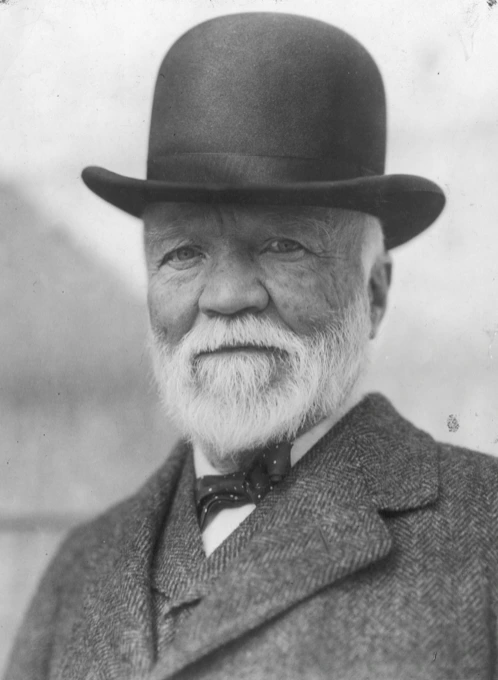
Scottish immigrant Andrew Carnegie rose from factory bobbin boy to steel magnate and one of the richest men in history. Central to his philosophy was gratitude for a private library opened to working boys in his youth. He never forgot the power of free access to books.
Between 1883 and 1929, Carnegie funded 2,509 libraries worldwide, including 1,681 in the United States. His grants required communities to provide land and ongoing maintenance funding—typically 10 percent annually—ensuring local commitment. He believed philanthropy should create opportunity, not dependency. “The library gives nothing for nothing,” he argued; communities had to invest in themselves.
Architecturally and civically, Carnegie libraries became democratic spaces: reading rooms, children’s sections, open
stacks, and prominent public locations. They anchored towns and cities alike, expanding literacy and self-education. Carnegie also funded universities, teacher pensions, and cultural institutions, but libraries were his signature.
His reputation was shadowed by labor conflicts, especially the Homestead Strike, and critics pointed to the tension between industrial practices and philanthropic generosity. Yet the scale of his library program permanently altered public access to knowledge. Where others built single institutions, Carnegie built infrastructure for learning across continents—breadth over depth, reach over
He believed that libraries could break the cycle of poverty and ignorance that he himself had escaped.